

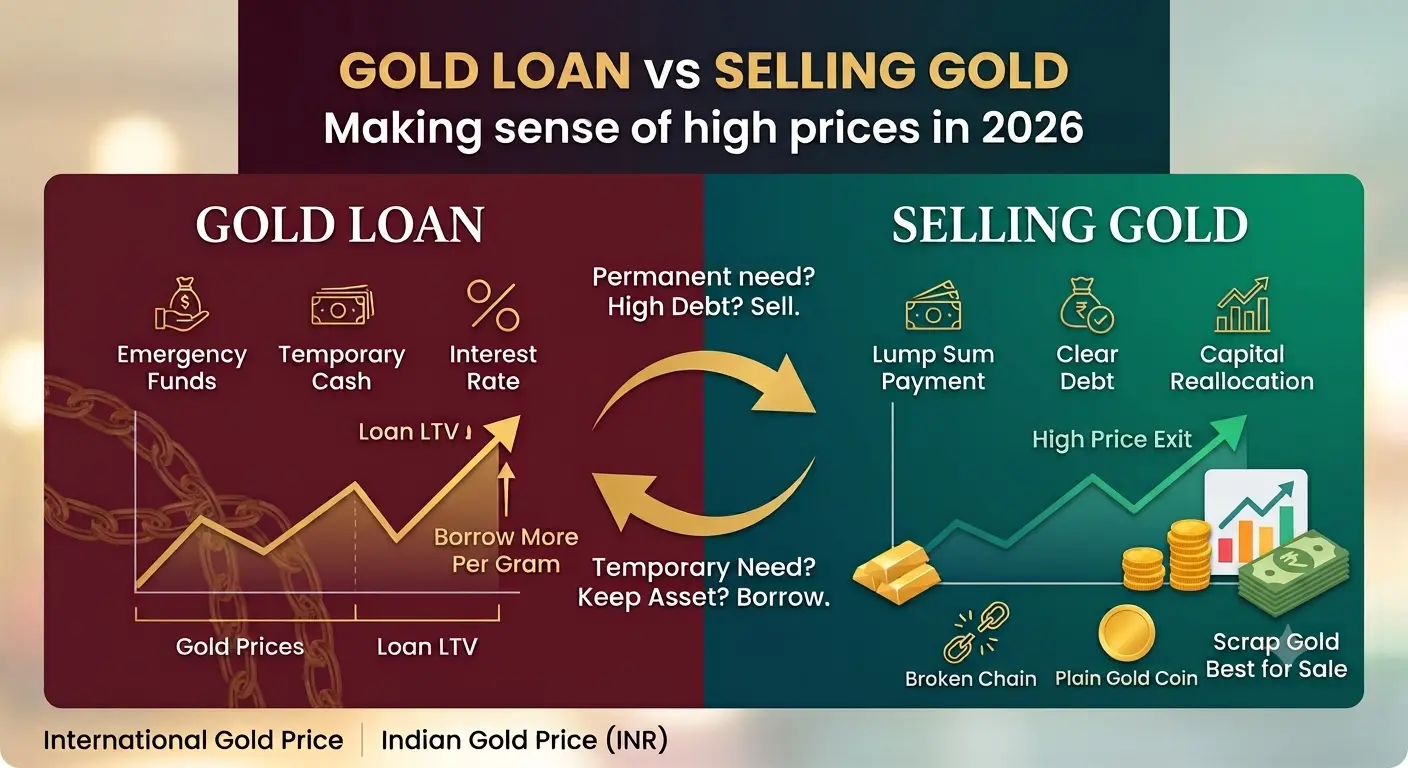
When Indian gold prices sit near record levels, households face the same dilemma: unlock cash without losing the metal, or sell and convert a high board into rupees forever. A gold loan vs selling gold choice is about time, interest, scrap haircuts, and whether you still want the jewellery. This is a decision framework. For LTV and fees, see our gold loan Gujarat guide. For buy-back math, see our sell old gold Ahmedabad guide. Check gold price today before valuing either path.
Key Takeaways
- A gold loan keeps ownership and upside; selling permanently exits the metal.
- High prices raise both loan size and scrap proceeds — they do not automatically favour one path.
- Interest and auction risk are the loan's cost; buy-back spreads and lost making are the sale's cost.
- Short need + clear reclaim → loan; intentional exit → sell.
- Plain metal compares more fairly than ornate bridal sets on both paths.
Two Different Jobs: Temporary Cash vs Permanent Exit
A gold loan is credit secured by pledged jewellery or coins — repay to reclaim the packet. Selling is a metal transaction: the buyer pays scrap value and the piece is gone. Treating a loan as free cash or a scrap sale as temporary is how families overpay interest or regret an heirloom exit. High prices intensify emotion; they do not change the job definition.
What Changes When Gold Prices Are High
Elevated boards lift lender assessments and scrap quotes alike — same grams, more rupees either way. The trap is over-borrowing because LTV headroom looks large, or selling sentimental pieces only because the board looks "too good to ignore" when you still need the jewellery next season. High prices expand option size; they do not remove repayment risk or scrap spreads.
| Factor at high prices | Gold loan effect | Selling effect |
|---|---|---|
| Higher metal valuation | Larger possible loan on same grams | Higher scrap proceeds on same grams |
| Family still needs the piece | Can reclaim after repayment | Piece is gone — repurchase costs making again |
| Uncertain repayment date | Interest and auction risk rise with time | No repayment clock after sale |
| Want to keep price upside | You still own the metal | Upside ends at the sale |
Interest Cost vs Scrap Haircut — Comparing Real Costs
Do not compare "loan amount" with "sale amount" alone. Compare net outcomes after costs.
- Loan path cost: interest over your realistic tenure + fees + penalties if you slip (detail in the gold loan guide).
- Sale path cost: buy-back spread + stone deductions + lost making charges (detail in the sell-old-gold guide).
- Repurchase later: metal again plus new making and GST — often the largest hidden cost of selling jewellery you still need.
Illustrative only: a short, well-funded loan on plain metal can beat selling a bridal set you will remake next year. A multi-year rolling loan with weak repayment plans can cost more than a clean scrap sale today.
Liquidity, Ownership and Opportunity Cost
Selling usually delivers more immediate cash because you are not capped by LTV — you receive scrap settlement, not a percentage advance. A loan pays less cash today but keeps ownership. Opportunity cost cuts both ways: selling locks the gain and ends interest risk; pledging keeps upside and cultural ownership. Neither path is free money.
Jewellery Resale Reality vs Pledge Valuation
Ornate sets lose making-charge value as scrap; lenders also deduct stones and may use a conservative internal rate. Plain hallmarked chains and coins compare more cleanly on both routes. If the piece is bridal-heavy, expect both loan and sale to feel smaller than the old purchase invoice. The decision point: ornate metal is a weaker cash machine than plain metal on either path.
Auction Risk and Repayment Obligations
Pledged gold is collateral. Miss payments long enough and the lender can auction under its policy. Selling has no auction clock, but also no reclaim. If cash flow is irregular, model the worst month before you pledge. If you already know you will not repay, selling — or GMS when idle deposit is the goal — is usually more honest than hoping the loan sorts itself.
When a Gold Loan May Make More Sense
- Short cash need with a clear repayment source.
- You want the same jewellery back for a wedding or festival.
- Keeping metal ownership matters more than maximising today's cash.
- Plain, well-documented pieces will assess cleanly.
When Selling May Make More Sense
- You will not reclaim the piece and do not want interest hanging over the household.
- You need more cash than a realistic LTV advance can provide.
- Broken or unused scrap with no emotional reclaim plan.
- You want a one-time settlement — see our gold tax guide for sale-side framing.
Ahmedabad Household Scenarios (Illustrative)
| Situation | Lean toward | Why |
|---|---|---|
| School fee gap for 4–6 months; bridal set needed next year | Gold loan | Temporary cash; reclaim before ceremony |
| Unused broken chain; no plan to remake | Sell | No reclaim value; avoid interest |
| Business working-capital bridge with clear receivable date | Gold loan (sized tightly) | Keep metal; match tenure to receivable |
| Downsizing locker; permanently exiting old sets | Sell (or GMS if depositing) | Exit is the goal, not credit |
Manek Chowk and CG Road see these conversations daily in high-price months. Photograph sanction weights before pledging, and take two same-day buy-back quotes before selling.
Practical Decision Framework
- Write the rupee amount you truly need — not the maximum available.
- Ask: will I reclaim this metal by a clear date?
- If yes, estimate all-in loan cost to that date and confirm repayment.
- If no, take two scrap quotes and compare net cash — then stop.
- If unsure, isolate one plain piece; never pledge the whole locker first.
- Never sell pledged gold before formal loan closure and release.
Risks of Choosing on Emotion Alone at High Prices
- Over-borrowing because high valuations make LTV feel generous.
- Selling heirloom sets you will repurchase next season with fresh making.
- Ignoring auction timelines while assuming you can refinance forever.
- Comparing loan disbursement to a scrap poster without matching net weight and purity.
Frequently Asked Questions
1. At high gold prices, should every household prefer a gold loan over selling?
No. Prefer a loan when reclaim and repayment are clear; prefer selling when exit is intentional.
2. Why is loan cash often lower than a scrap quote on the same jewellery?
Loans advance only up to LTV on assessed value; a sale settles scrap value, not a capped credit line.
3. Does selling jewellery at a record board lock in a perfect decision?
It locks cash and ends upside. Wisdom depends on whether you still need the piece and what you do with the rupees.
4. Can I pledge some pieces and sell others?
Yes. Pledge what you will wear again; sell unused scrap.
5. Is interest always cheaper than making charges lost on sale?
Not always. Short tenures on plain metal can favour loans; long uncertain tenures or unwanted ornate sets often favour selling.
6. What if I already have a gold loan and prices rise further?
Higher prices do not cancel repayment. Ask about top-up rules if offered; do not ignore EMIs because collateral is "worth more."
Data Sources and References
- Reserve Bank of India — gold loan regulatory framework and consumer credit context.
- World Gold Council — India household gold and monetisation behaviour.
- BIS — hallmarking relevant to pledge and scrap valuation.
- Reuters — bullion price context affecting collateral and scrap boards.
Conclusion
A gold loan vs selling gold choice at high prices is a reclaim-and-repayment test. Keep the metal when the need is temporary and funded; sell when ownership is no longer the goal. Price sets option size — discipline sets which path you take.
Disclaimer: This article is for informational and educational purposes only. It is not personalised lending, tax, or investment advice. Gold loans involve credit and auction risk; scrap sales are final. Illustrative examples are not live quotes — verify lender terms, buy-back rates, and consult a qualified professional before deciding.
Keywords: gold loan vs selling gold, pledge gold or sell, gold loan when prices high, sell jewellery vs gold loan, gold loan opportunity cost, pledged gold auction risk, jewellery resale vs loan.