
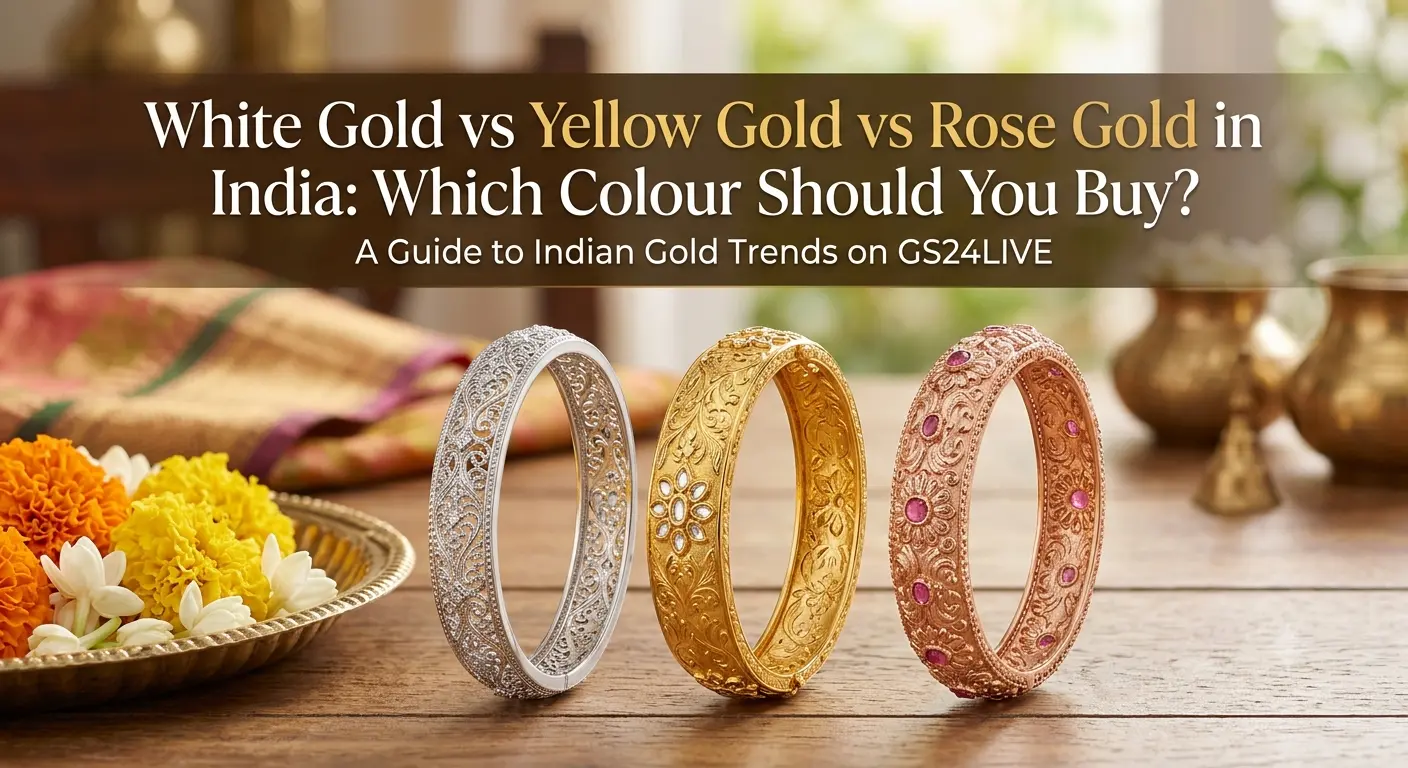
Indian jewellers still sell mostly deep yellow 22K sets — yet shop windows increasingly show white and rose pieces beside them. Buyers often ask whether white metal is “purer,” whether rose gold is a temporary fashion, or whether colour changes the buy-back rate. Those questions are about alloy colour and surface finishing, not karat maths. This guide compares white gold vs yellow gold and rose gold for Indian wear, care, cost, and resale — without re-teaching purity scales.
For karat, BIS marks, and 916 versus 999 decisions, use our 22K vs 24K gold guide in one link only. Cultural reasons India defaults to 916 yellow bridal gold are in the why 916 gold is popular guide. Check GS24LIVE’s gold price today page before comparing coloured pieces on a per-gram board.
Key Takeaways
- Colour is an alloy and plating choice — it does not automatically mean higher or lower karat than the stamp states.
- Yellow gold remains the cultural default for most Indian bridal jewellery and often the easiest buy-back conversation.
- White gold usually relies on rhodium plating for the bright white look; plating wears and may need re-coating.
- Rose gold gets its pink tone from copper-rich alloys; tone can mellow with wear and polish cycles.
- Making charges and stone-setting styles often differ by colour line even at the same net gold weight.
What “Colour” Means in a Gold Alloy
Pure gold is naturally yellow. Workshops mix copper, silver, palladium, nickel, or other metals to change hardness and hue while targeting a fineness such as 750 (18K) or 916 (22K). The hallmark still reports purity; the eye reports colour. Confusing the two leads to bad counter questions such as “Is white gold 24K?” — answer that via the 22K guide, not here.
Fashion jewellery lines in India often use 18K for white and rose diamond rings because those alloys cast and set stones well. Traditional yellow bridal sets stay on 22K in many Gujarat showrooms. Always read the stamp on the piece in front of you rather than assuming colour equals karat.
Yellow Gold: The Indian Bridal Default
Yellow 22K remains the social language of mangalsutra, bangles, and heavy sets across much of India. Families recognise the colour instantly; heirloom matching is easier; many buy-back desks quote yellow 916 all day. That familiarity is a liquidity advantage when you later exchange or sell — process details stay in the sell-old-gold and making-charges articles.
Yellow also hides minor surface wear better than bright white plating. Daily chains that brush against kurtas and phone edges keep looking “like gold” longer without a re-plate appointment.
White Gold and the Rhodium Plating Lifecycle
Most retail white gold is a pale alloy finished with a thin rhodium coat for mirror-white brightness. Rhodium is hard and reflective, but it is a coating — friction from rings rubbing together, hand sanitisers, and abrasive cleansers thin it over months or years. Underneath, the alloy may look greyish or slightly yellow depending on the mix.
Re-plating is a normal maintenance cost in cities with jewellery service counters, including Ahmedabad. Budget for occasional re-rhodium on daily-wear white rings the same way you budget polish — and avoid confusing plating wear with purity loss. Weight and polish myths are covered in our gold weight myths guide.
Rose Gold: Copper Tone, Romance, and Softening Over Time
Rose (or pink) gold leans on copper for its warm hue. It photographs well, pairs with modern outfits, and has strong gift demand for rings and light pendants. Copper-rich surfaces can darken or soften in tone with skin chemistry, perfume, and polish. That is usually surface behaviour, not a karat change — verify with testing methods only if fraud is suspected via our purity testing guide.
| Factor | Yellow gold | White gold | Rose gold |
|---|---|---|---|
| Typical Indian use | Bridal sets, daily yellow chains | Diamond rings, modern bands | Fashion rings, light pendants |
| Surface finish | Natural yellow alloy look | Often rhodium plated | Copper-warm alloy tone |
| Maintenance | Polish as needed | Re-plate when white dulls | Tone may mellow; gentle clean |
| Buy-back conversation | Most familiar at counters | May need alloy explanation | May need alloy explanation |
| Matching heirlooms | Easiest with traditional sets | Harder against yellow trousseau | Harder against yellow trousseau |
Making Charges and Design Cost by Colour Line
Colour alone should not change the metal rate for the same fineness and weight, but design lines do. White and rose diamond jewellery often carries higher making or stone-related charges than a plain yellow chain of equal net gold. Festival “zero making” banners still need invoice scrutiny — labour math lives in our gold making charges guide.
| Period | Colour trend note (India retail) | Buyer implication |
|---|---|---|
| Pre-2010 | Yellow 22K dominates almost all bridal counters | Limited white/rose SKUs outside metros |
| 2010–2018 | 18K white diamond rings expand in mall jewellers | Couples split: yellow sets + white bands |
| 2019–2023 | Rose gold fashion spike in lightweight jewellery | Gift demand rises; heirloom match stays yellow |
| 2024–2026 | Mixed trousseau common in urban Gujarat | Ask for separate invoices per colour/karat line |
Ahmedabad Showrooms: How Colour Is Quoted on CG Road
On CG Road and Satellite Road, yellow 916 boards remain the headline rate customers photograph. White and rose pieces are often pulled from 18K diamond counters with separate tags. Practical habit: confirm karat stamp, net gold weight, making line, and whether rhodium is included in the quoted making before you pay.
- Ask whether re-plating service exists in-house and what a ring re-rhodium typically costs after 18–24 months of daily wear.
- If mixing colours in one bill, insist each line shows fineness clearly — mixed invoices confuse later buy-back.
- For bridal yellow sets, do not assume a matching white band shares the same karat without checking the mark.
Risks: Mistaking Plating Wear for Purity Loss
When white rings turn patchy, panicked buyers sometimes accuse the jeweller of “fake gold.” Often the rhodium is worn, not the fineness. The reverse risk also exists: fraudsters can misuse colour talk to distract from hallmark checks — scam patterns belong in the scams guide. Your job at the counter is still stamp, weight, and invoice clarity.
Another risk: buying rose or white fashion pieces as “investment gold.” Resale desks may apply different preferences and stone deductions. Treat coloured fashion jewellery as wearable first; use coins, bars, or paper gold for pure metal exposure.
Buying Strategy by Use-Case
- Traditional bridal trousseau: Prioritise yellow 22K for cultural match and simpler future exchange.
- Engagement / daily diamond ring: White 18K is common; budget for rhodium maintenance.
- Fashion gifting: Rose works if the wearer likes the tone; keep weights modest if resale is uncertain.
- Mixed wardrobe: Separate invoices; do not force one colour philosophy on every piece.
- Metal-only savings: Prefer coins/bars or paper gold rather than coloured fashion jewellery.
Frequently Asked Questions
1. Is white gold purer than yellow gold?
No. Purity is the karat or fineness stamp. White is a colour finish and alloy choice, not automatic higher purity.
2. Does rose gold stay pink forever?
The copper tone can mellow with wear and polishing. That is normal surface behaviour for many rose alloys.
3. Can white gold be re-rhodium plated in Ahmedabad?
Many full-service jewellers and polish workshops offer re-plating. Ask cost and turnaround before you buy a daily-wear white ring.
4. Which colour buys back more easily in India?
Yellow 22K jewellery usually faces the most familiar buy-back conversation. White and rose depend on local demand and stone deductions.
5. Does colour change the BIS hallmark karat?
Hallmark reports fineness, not fashion colour. Read the stamp on each piece.
6. Should wedding sets and rings be the same colour?
Not required. Many couples keep yellow bridal sets and a white band — just document each karat separately.
Data Sources and References
- Bureau of Indian Standards (BIS) — hallmarking and fineness marks on jewellery.
- World Gold Council — jewellery demand and consumer trends.
- LBMA — international gold quality context for refined feedstock.
- MCX India — reference pricing context for retail boards.
- Reuters — jewellery and bullion market reporting.
Conclusion
Choosing among white, yellow, and rose gold in India is a wear-and-culture decision layered on top of karat — not a substitute for reading the hallmark. Yellow still wins most bridal and buy-back conversations; white needs rhodium honesty; rose needs tone expectations.
Match colour to how you will wear and later exchange the piece, keep invoices clear by line, and use purity guides when the question is fineness rather than fashion.
Disclaimer: This article is for informational and educational purposes only. Precious metal jewellery involves making charges, plating maintenance, and market risks. Verify stamps and invoices and consult a qualified professional before purchasing.
Keywords: white gold vs yellow gold, rose gold jewellery India, rhodium plating white gold, yellow gold bridal jewellery, gold colour comparison India, white gold fading care, rose gold vs yellow gold rings.