

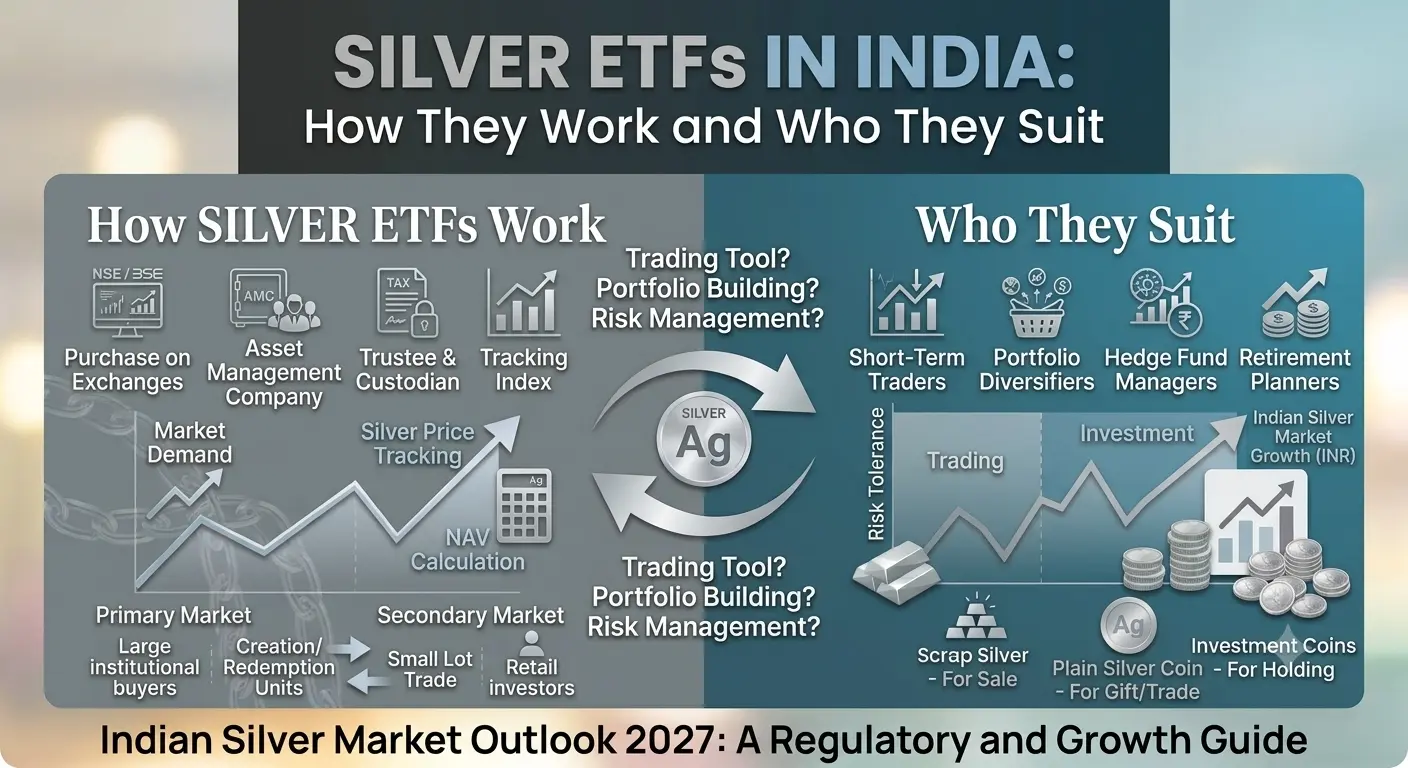
Silver ETFs moved from niche product to mainstream conversation in India after assets and retail interest jumped hard in recent market cycles. A silver ETF India unit gives price exposure through a demat account — not a bar in a locker and not a 925 bangle. This guide explains how the product works, where it differs from gold ETFs and physical silver, and who it actually suits. Industrial demand drivers belong in our silver industrial demand guide. Gold ETF habits in Ahmedabad are covered separately in our gold ETF guide. Check live silver price today for physical context, not as the ETF NAV itself.
Key Takeaways
- Silver ETFs track domestic silver prices via demat units — no making charges, but brokerage, expense ratio, and tracking difference apply.
- Silver usually swings harder than gold; ETF unit prices inherit that volatility.
- Liquidity and spreads can be thinner than popular gold ETFs — check volume before large orders.
- Physical silver and 925 jewellery solve different jobs; ETFs are for financial exposure, not wedding wear.
- Read factsheet holdings, TER, and tracking record before you pick a scheme.
What a Silver ETF Actually Represents
A silver exchange-traded fund holds silver (directly or through permitted structures disclosed by the AMC) and issues units that trade on NSE/BSE like shares. When you buy units, you own a claim on the fund's silver exposure — not a specific hallmarked bar with your name on it. Creation and redemption by authorised participants help keep market price near NAV, but small gaps appear on thin or volatile days. That plumbing is similar in spirit to gold ETFs; the metal, volatility, and liquidity profile are not identical.
Buying and Selling on Demat — The Practical Path
You need a demat and trading account with a SEBI-registered broker. Search the silver ETF ticker, check live bid-ask and volume, place a buy, and units credit to demat after settlement. Selling reverses the same path. There is no jeweller making charge and no locker rent — costs shift to brokerage, exchange fees, and the fund's expense ratio deducted inside NAV over time. SIP-style recurring buys are possible through many broker apps, but they do not remove market timing risk on each purchase date.
| Step | What you do | What to verify |
|---|---|---|
| Open demat/trading | KYC with broker | SEBI registration, account charges |
| Compare schemes | Factsheets / AMC sites | TER, AUM, tracking difference |
| Check market depth | Order book / volume | Bid-ask width before size |
| Buy / sell | Limit or market order | Prefer limits on thin days |
| Track holding | Demat statement | Corporate actions / dividends if any (rare for commodity ETFs) |
NAV, Market Price and Tracking Difference
NAV reflects the fund's silver holdings and cash, marked using the disclosed pricing method. Market price is what buyers and sellers agree on the exchange. Tracking difference is how the fund's return drifts from the silver benchmark over time after expenses and operational frictions. Expense ratio is the ongoing drag; impact cost is what you pay when the bid-ask is wide. For beginners, a low TER alone is not enough — thin liquidity can erase that saving on entry and exit.
Why Silver ETFs Feel Different From Gold ETFs
Gold ETF markets in India are deeper and more familiar to retail investors. Silver ETFs can show lower average daily volume and wider spreads, especially outside peak sessions. Silver's dual role — investment metal plus industrial input — also feeds sharper drawdowns and rallies than gold typically shows. Volatility mechanics are covered in our silver volatility guide; here the investor takeaway is position size. Treat a silver ETF allocation as a satellite holding unless you deliberately want higher beta to bullion.
| Dimension | Silver ETF (typical) | Gold ETF (typical) |
|---|---|---|
| Volatility | Higher | Lower relatively |
| Retail familiarity | Growing fast | More established |
| Liquidity depth | Often thinner — check live | Usually deeper |
| Cultural overlap | Less wedding use | Strong jewellery parallel |
Silver ETF vs Physical Silver and 925 Jewellery
Physical bars and coins give tangible metal and pledge/sale options at bullion counters, with storage and buy-back spreads. Hallmarked 925 jewellery is for wear — not an efficient silver price proxy once making and design enter the invoice. A silver ETF suits investors who want clean price exposure and easy partial exits without melting or locker logistics. It does not replace a gift bangle or a workshop's raw metal stock. For sterling buying rules, see our 925 silver jewellery guide.
| Need | Better fit |
|---|---|
| Wear / gifting | 925 jewellery |
| Physical metal in hand | Coins / bars |
| Demat price exposure, easy resize | Silver ETF |
| Industrial fabrication feedstock | Wholesale physical — not ETF units |
Who a Silver ETF Suits — and Who It Does Not
- Suits: Investors already comfortable with demat, wanting satellite silver exposure beside gold or equity, who can tolerate wider swings.
- Suits less: Buyers who need ornaments, households without demat access, or anyone funding near-term expenses with money that cannot survive a sharp drawdown.
- Size carefully: Because silver moves faster, a smaller portfolio weight often matches the risk better than mirroring your gold ETF percentage one-for-one.
Ahmedabad investors who already hold gold ETFs sometimes add silver ETFs for diversification within metals. That only works if you accept correlation can spike in risk-off weeks — both can fall together. Portfolio metal framing versus jewellery lives in our retail vs investment guide.
Checklist Before You Buy Units
- Confirm the scheme is a silver ETF (not an unrelated thematic equity fund with "silver" in marketing copy).
- Read TER, AUM trend, and disclosed tracking difference.
- Check average volumes and bid-ask on your broker screen at the time you trade.
- Prefer limit orders on quiet afternoons.
- Know the tax path for listed ETF units when you sell — product tax overview sits in our gold tax guide for securities-style holdings; verify current rules for silver ETFs with a tax professional.
- Write your exit reason before entry (rebalance date, max loss comfort, goal).
Risks Specific to Silver ETF Investors
- Higher price volatility than gold ETFs.
- Wider spreads and slippage on thin liquidity days.
- Tracking difference and expense drag versus a theoretical silver benchmark.
- Counterparty/operational reliance on AMC custody and exchange settlement — you do not hold labelled bars at home.
- Confusing ETF units with jewellery value or industrial scrap quotes on CG Road.
Frequently Asked Questions
1. Do I get physical silver delivered when I buy a silver ETF?
Retail investors typically hold demat units. Physical delivery, if any, follows the scheme's specific terms and is not the everyday retail path.
2. Is a silver ETF safer than holding silver bars at home?
It removes locker and theft logistics but adds market, liquidity, and tracking risks. "Safer" depends on which risks you fear more.
3. Can I use a silver ETF instead of buying silver jewellery for Diwali?
No for gifting and wear. ETFs do not replace ornaments; they replace financial metal exposure.
4. Why might my silver ETF return differ from the silver board I see online?
Expense ratio, tracking difference, and the exact benchmark timing differ from a local retail board or delayed app quote.
5. Should beginners start with silver ETF or gold ETF?
Many beginners find gold ETFs easier because of deeper liquidity and lower relative volatility; silver can wait until you understand demat trading costs.
6. Does industrial demand automatically make silver ETFs a good buy?
Industrial demand is one long-term theme — not a buy signal by itself. Price already embeds expectations; see the industrial guide for the demand story, not for timing advice.
Data Sources and References
- MCX India — silver futures context for physical/price awareness.
- RBI — domestic market and currency backdrop.
- World Gold Council — precious metals investment research context.
- Reuters — bullion market reporting.
- LBMA — international silver pricing benchmarks.
Conclusion
A silver ETF India holding is demat silver-price exposure with expense, tracking, and liquidity trade-offs — not a jewellery substitute and not a guaranteed industrial-demand lottery ticket. Use it when you want resizeable financial silver beside clearer goals for ornaments or physical bars, and size it for silver's wider swings.
Disclaimer: This article is for informational and educational purposes only. Silver and ETF investments carry market, liquidity, and tracking risks. Charts use illustrative data. Verify live NAV, volumes, scheme documents, and tax rules, and consult a SEBI-registered adviser or qualified professional before investing.
Keywords: silver ETF India, silver exchange traded fund, buy silver ETF demat, silver ETF vs physical silver, silver ETF liquidity India, silver ETF expense ratio, Ahmedabad silver ETF investors.