
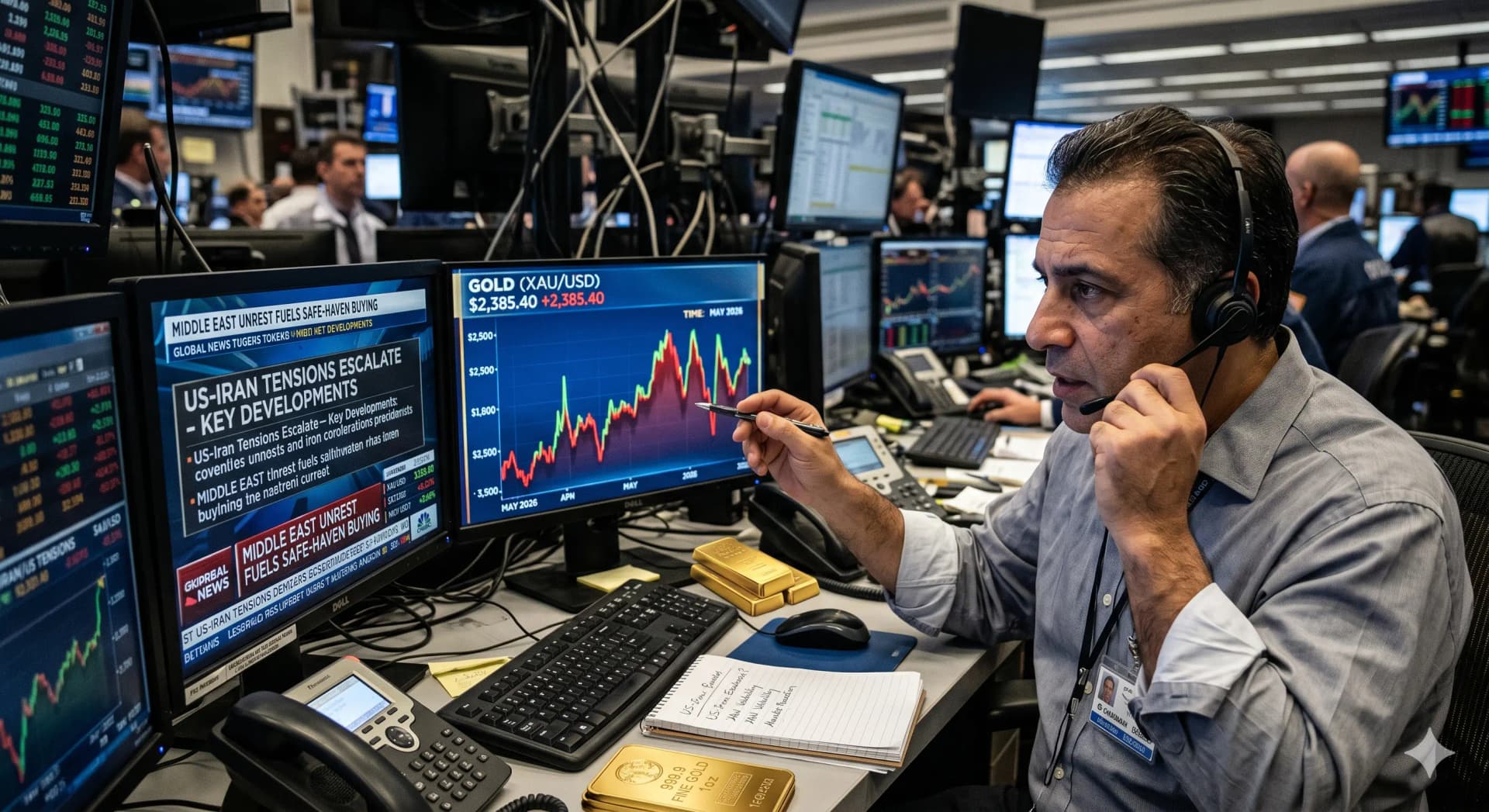
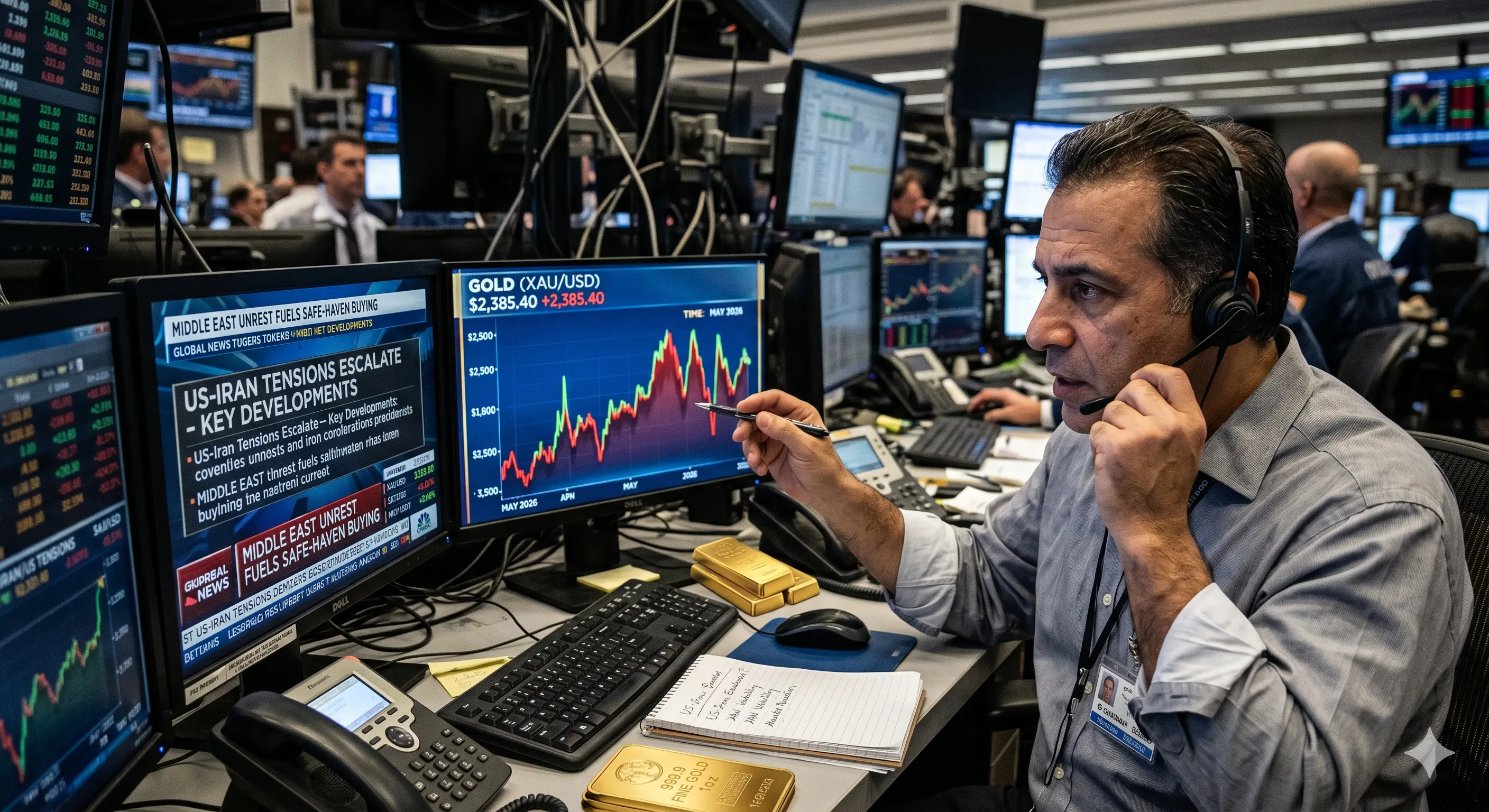
Gold prices are once again witnessing heightened volatility as geopolitical tensions between the United States and Iran continue to keep global financial markets on edge. Investors across the world are closely monitoring diplomatic developments, oil price fluctuations, and inflation concerns, all of which are influencing the direction of precious metals.
Traditionally, gold has been considered a safe-haven asset during periods of geopolitical uncertainty. Whenever tensions rise in the Middle East, investors tend to shift capital toward gold and silver to protect their portfolios from market instability.
In India, this global uncertainty is directly impacting MCX gold prices, Ahmedabad bullion rates, and retail jewellery demand. The market is reacting not only to international spot prices but also to currency fluctuations, crude oil prices, and US Federal Reserve policy expectations.
Key Takeaways
- Gold prices are fluctuating due to uncertainty surrounding US-Iran relations.
- Investors are moving toward safe-haven assets amid geopolitical concerns.
- MCX gold and silver prices remain sensitive to crude oil and dollar movements.
- Silver is showing stronger volatility because of industrial demand trends.
- Indian bullion markets are also reacting to rupee-dollar fluctuations.
Why Gold Prices Are Rising Amid Geopolitical Tensions
Geopolitical conflicts have historically played a major role in shaping gold price trends. Whenever uncertainty rises globally, investors reduce exposure to risky assets like equities and move funds into traditional safe-haven investments.
The ongoing uncertainty surrounding US-Iran relations is creating concerns about:
- Potential disruptions in global oil supply
- Rising inflation pressures
- Global economic slowdown risks
- Currency market instability
- Increased market volatility
As crude oil prices rise during geopolitical tensions, inflation fears usually strengthen. Gold often benefits in such scenarios because investors use it as a hedge against inflation and currency depreciation.
Market Overview: Gold and Silver Price Movement
| Date | Gold Price (10g) | Silver Price (1kg) | Change % |
|---|---|---|---|
| 20 May 2026 | ₹97,850 | ₹1,08,200 | +0.8% |
| 21 May 2026 | ₹98,450 | ₹1,09,700 | +1.2% |
| 22 May 2026 | ₹97,950 | ₹1,07,900 | -0.6% |
| 23 May 2026 | ₹98,300 | ₹1,08,850 | +0.4% |
The above movement highlights how quickly bullion markets are reacting to geopolitical headlines and macroeconomic developments.
The line chart below is illustrative: it compares indexed gold and silver performance over recent months—silver often swings more sharply when geopolitical headlines hit industrial and investment channels together.
MCX Gold Explained: Why Futures Prices Matter
MCX (Multi Commodity Exchange of India) gold futures serve as a benchmark for Indian bullion traders and investors. These futures contracts reflect expectations regarding future gold prices based on global developments.
Whenever geopolitical tensions intensify, traders often increase hedging activity in MCX gold contracts, leading to higher volatility.
Current market sentiment indicates:
- Strong safe-haven buying support
- High intraday volatility
- Short-term profit booking pressure
- Uncertainty surrounding global diplomacy
Market Factors Affecting Prices
Several interconnected global factors are currently influencing gold and silver prices.
1. US-Iran Geopolitical Developments
Any escalation in tensions can trigger immediate buying in safe-haven assets like gold.
2. Crude Oil Prices
Middle East tensions often impact oil supply expectations, pushing crude prices higher and increasing inflation fears.
3. US Federal Reserve Policy
Interest rate expectations remain one of the biggest drivers of bullion prices globally.
4. US Dollar Movement
Gold prices generally move inversely to the US dollar. A weaker dollar supports higher bullion prices.
5. Central Bank Gold Buying
Many central banks continue increasing gold reserves to diversify away from currency-related risks.
During US–Iran tension cycles, analysts often weigh how much each macro theme is pulling bullion—not a live forecast, but a useful snapshot of what traders watch alongside spot and MCX.
Gold vs Silver Comparison
| Feature | Gold | Silver |
|---|---|---|
| Primary Role | Safe-haven investment | Industrial + investment demand |
| Volatility | Moderate | Higher volatility |
| Inflation Hedge | Strong | Moderate |
| Industrial Usage | Limited | Very high |
| Liquidity | Higher | Moderate |
While gold benefits directly from geopolitical uncertainty, silver often experiences sharper movements due to industrial demand expectations.
Silver Market Analysis
Silver prices are also showing significant volatility alongside gold. However, silver has additional demand drivers because it is widely used in:
- Solar panels
- Electronics manufacturing
- Electric vehicles
- Medical equipment
- Industrial machinery
The clean energy transition continues supporting long-term silver demand globally. Analysts believe industrial demand could remain a major price driver over the next few years.
Gold Price Prediction
Market analysts believe gold may remain volatile in the near term as investors react to geopolitical headlines and central bank policy decisions.
Possible scenarios include:
- Bullish Scenario: Escalation in tensions could push gold prices higher.
- Neutral Scenario: Diplomatic stability may reduce safe-haven demand temporarily.
- Bearish Scenario: Stronger US dollar and higher interest rates could pressure bullion prices.
Despite short-term fluctuations, long-term structural support for gold remains strong due to persistent inflation concerns and global economic uncertainty.
Chart Data: Gold and Silver Trend
  Month | Gold Price | Silver Price
  Jan | 89200 | 98400
  Feb | 90550 | 100800
  Mar | 91800 | 102600
  Apr | 94300 | 104900
  May | 98300 | 108850
Real-World Example: Investor Behaviour During Crisis
During previous geopolitical crises, including global conflicts and economic disruptions, gold prices often witnessed sharp upward movement as investors sought stability.
For example:
- Gold surged during the Russia-Ukraine conflict.
- Safe-haven buying increased during banking sector instability.
- Central banks accelerated gold accumulation during currency uncertainty.
The current market environment reflects similar investor psychology.
Best Time to Buy Gold
Timing the bullion market perfectly is extremely difficult, especially during volatile periods. Financial experts generally recommend:
- Systematic accumulation strategy
- Portfolio diversification
- Avoiding panic buying during spikes
- Focusing on long-term goals
Investors should avoid making decisions based solely on short-term geopolitical headlines.
Gold Investment Strategy for Indian Investors
Indian investors can consider multiple ways to gain exposure to gold:
- Physical gold
- Gold ETFs
- Sovereign Gold Bonds
- Digital gold
- MCX gold trading
Each investment option has different liquidity, taxation, and risk characteristics. Investors should align their investment choice with their financial objectives and risk tolerance.
Geopolitical Outlook for Gold
Market experts believe bullion markets may remain highly sensitive to geopolitical developments over the coming weeks. Traders are expected to monitor:
- US foreign policy announcements
- Middle East developments
- Federal Reserve commentary
- Inflation data
- Global crude oil prices
Long-term sentiment toward gold remains positive as global uncertainty continues supporting safe-haven demand.
Frequently Asked Questions
1. How do US-Iran tensions specifically move MCX gold at opening bell?
Safe-haven bids in overnight COMEX and LBMA sessions often gap MCX higher at 9 AM if tensions escalate over a weekend or after-hours headline cycle.
2. Why does gold sometimes fall even when geopolitical risk rises?
A simultaneous dollar rally or yield spike can outweigh safe-haven demand — both drivers can act on the same trading day.
3. Does Ahmedabad retail gold follow geopolitical spikes immediately?
Usually within the same day via MCX, but shop rates may lag by hours depending on dealer inventory and festival-season demand.
4. How long do geopolitical gold rallies typically last?
Initial spikes can fade within days if no follow-through materialises. Sustained moves need ongoing macro support beyond the headline event.
5. Should traders hedge silver differently during geopolitical gold spikes?
Silver may lag gold initially then catch up if industrial sentiment holds; it can also sell off harder if growth fears dominate the narrative.
Data Sources and References
Below are the primary public references used while preparing this Gold Prices Turn Volatile analysis for GS24LIVE readers.
- Multi Commodity Exchange of India (MCX) – live gold and silver futures source for the Gold Prices Turn Volatile comparisons discussed above.
- World Gold Council – global gold research desk referenced for the Gold Prices Turn Volatile long-horizon context.
- London Bullion Market Association (LBMA) – precious-metals standards source used where Gold Prices Turn Volatile meets international pricing.
- Reserve Bank of India (RBI) – domestic policy source linked wherever Gold Prices Turn Volatile meets rupee or liquidity conditions.
- International Monetary Fund (IMF) – world economic outlook source supporting the Gold Prices Turn Volatile scenario discussion.
These sources help provide reliable insights into global bullion markets, macroeconomic trends, and price movements affecting gold and silver trading in India.
Conclusion
Gold prices are likely to remain volatile as geopolitical uncertainty surrounding US-Iran relations continues influencing investor sentiment. While short-term fluctuations may persist, long-term demand for safe-haven assets remains strong amid inflation risks and global economic uncertainty.
For Indian investors, focusing on disciplined investing, diversification, and a pre-written buy/sell plan usually beats reacting to every escalation headline. Use oil and rupee screens as context, then confirm the live gold board before changing any position.
Related Reading on GS24LIVE
- Live gold price today
- Live silver price today
- How crude oil affects gold and silver
- Inflation and bullion markets
- January 2026 bullion rally guide
Disclaimer: Geopolitical market commentary for education only. Headline risk cuts both ways — verify live prices and avoid sizing positions solely on conflict headlines.