
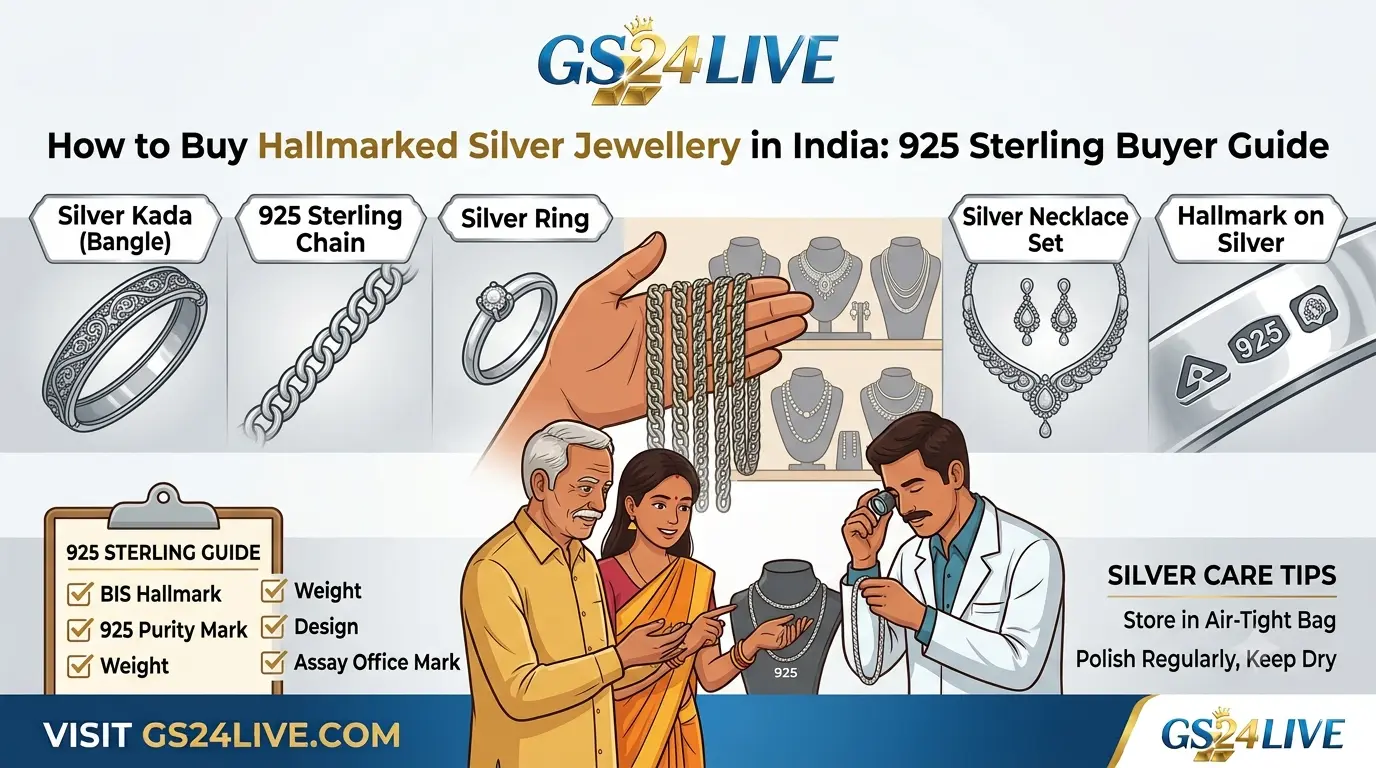
Silver counters in Ahmedabad and Rajkot are busier than most buyers realise — anklets, rings, pooja items, and gifting pieces move steadily all year, not just during festivals. Yet many buyers cannot explain what the tiny "925" stamp on a pendant actually means, or why their silver chain went dark within months while a family heirloom stayed bright for decades. Understanding 925 silver jewellery India buyers rely on — sterling composition, hallmark basics, and honest care — prevents both overpaying and disappointment after purchase.
This guide covers what 925 actually means, BIS silver hallmarking, jewellery-versus-bullion formats, tarnish and plating care, and fake pure-silver tricks. Broader silver investment positioning against gold is covered in our gold vs silver investment guide, and general jewellery vs investment framing in our retail vs investment Ahmedabad guide — both linked once here rather than repeated.
Key Takeaways
- 925 silver means 92.5% pure silver alloyed with about 7.5% other metal, almost always copper, for strength — it is genuine sterling silver, not fake silver.
- Pure (999) silver is too soft for most wearable jewellery, which is exactly why sterling alloys exist for rings, chains, and bangles.
- BIS hallmarking on silver jewellery works similarly to gold hallmarking but is less universally enforced at smaller counters — always check for the mark.
- Tarnishing (blackening) is a normal chemical reaction of the copper content with air and skin oils, not a sign of fake silver.
- Rhodium or other plating on silver jewellery wears off over time and needs replating — a cost buyers often do not anticipate at purchase.
What "925" Actually Means on a Silver Stamp
The number 925 refers to parts per thousand — 92.5% silver by weight, with the remaining 7.5% typically copper, occasionally a small amount of other alloying metal for specific finishes. This ratio, known internationally as sterling silver, has been the standard for wearable silver jewellery for centuries because pure silver alone is too soft to hold a ring shape, resist bending, or survive daily wear without deforming.
Seeing "925" stamped inside a ring band or on a clasp is a good sign, not a red flag — it tells you the piece follows an internationally recognised composition standard rather than an unknown, unverified alloy mix that some low-cost sellers use without disclosing the actual silver content.
BIS Hallmarking on Silver: What to Look For
India's Bureau of Indian Standards extended its hallmarking scheme to silver jewellery alongside its long-established gold hallmarking system, using similar principles — a BIS mark, purity grade (like 925), an assaying centre identifier, and increasingly a unique identification component on registered pieces. In practice, enforcement and buyer awareness for silver hallmarking still lag behind gold, so smaller counters and unbranded stalls sometimes sell unmarked or vaguely marked silver pieces without much pushback from buyers.
Always ask specifically for the purity stamp on any silver piece above token value, and prefer hallmarked stock from established jewellers over unmarked silver from casual stalls, even if the unmarked piece looks identical and costs slightly less. The savings rarely justify the uncertainty about actual silver content.
| Format | Typical purity | Primary purpose | Hallmark expectation |
|---|---|---|---|
| 925 sterling jewellery | 92.5% silver, 7.5% alloy | Rings, chains, bangles, daily wear | BIS mark should be present on branded stock |
| Silver coins | Usually 999 or 999.9 | Gifting, small investment, pooja | Refiner certificate and serial number |
| Silver bars | Usually 999 | Bulk investment holding | Assay certificate from recognised refiner |
| Unmarked "silver-look" items | Unknown, sometimes low-grade alloy | Fashion/costume pieces | None — treat as decorative, not investment |
Jewellery vs Coins and Bars: Choosing the Right Silver Format
If your goal is wearable jewellery — rings, earrings, anklets, mangalsutra-style pieces — 925 sterling is the right and expected format; asking for "999 pure silver jewellery" for daily wear is usually impractical since it will bend and scratch far more easily. If your goal leans toward gifting bars, coins, or a modest silver holding alongside gold, 999 formats in sealed, certified packaging serve that purpose better than jewellery, which carries making charges that do not translate into resale value.
Many Ahmedabad and Rajkot families mix both: sterling silver for daily-use pieces like payal (anklets) and pooja items, plus a small stack of certified silver coins or bars for a token investment habit, treating them as separate categories rather than expecting jewellery to double as an efficient investment vehicle.
Why Silver Jewellery Tarnishes and How to Care for It
Tarnishing — the dulling and blackening you see on unworn sterling silver over weeks or months — happens because the copper in the alloy reacts with sulphur compounds in air, skin oils, and even some cosmetics. It is a normal chemical process, not evidence of fake or low-purity silver; pure silver alone would resist tarnish better but, as covered above, is impractical for most jewellery formats.
- Store silver pieces in airtight pouches or anti-tarnish cloth, not loose in an open jewellery box, when not worn regularly.
- Clean gently with a dedicated silver polish cloth rather than abrasive household cleaners that can scratch the surface.
- Remove silver jewellery before swimming, applying perfume directly on the piece, or heavy sweating activities to slow tarnish buildup.
- For rhodium-plated silver pieces, expect the bright white plating to wear thin over one to three years of regular wear, revealing a duller base underneath — this is normal, not a manufacturing defect.
| Care task | Frequency | Approx. cost consideration |
|---|---|---|
| Anti-tarnish pouch storage | Ongoing, always when not worn | Low, one-time purchase |
| Professional polish/cleaning | Every 6–12 months for regular wear | Modest service charge at jeweller |
| Rhodium replating | Every 1–3 years depending on wear | Meaningful add-on cost buyers should budget for |
| Clasp and setting check | Annually for daily-wear pieces | Usually minor repair cost |
Fake "Pure Silver" Tricks to Watch For
Some sellers market plated base-metal jewellery — often nickel or brass with a thin silver or white-metal coating — as "pure silver" to unfamiliar buyers, particularly in tourist markets or unregistered online listings. A magnet test (silver is not magnetic, so a piece that sticks strongly to a magnet is not genuine silver) offers a rough first check, though it does not confirm exact purity. A more reliable approach is asking for the hallmark, purity stamp, and invoice explicitly stating silver content, and buying from jewellers who will state purity in writing rather than verbally only.
Broader jewellery fraud patterns — fake hallmarks, bait pricing, and exchange manipulation — are covered comprehensively in our gold jewellery scams guide; the checks above are silver-specific additions rather than a repeat of that fraud checklist.
Ahmedabad and Rajkot Silver Lanes: Local Buying Habits
Rajkot has long been known as one of Gujarat's strongest silver jewellery and craftsmanship hubs, particularly for anklets, payal, and traditional ornamental pieces, while Ahmedabad's Manek Chowk and nearby lanes stock both sterling jewellery and investment-format coins and bars side by side. Local buyers commonly negotiate silver jewellery pricing per piece rather than strictly per gram for intricately worked items, since labour on fine silver anklets or pooja items can represent a larger share of the price than it does on simpler gold chains.
- Ask Rajkot or Ahmedabad counters explicitly whether pricing is per gram or per piece before comparing two shops' quotes.
- For daily-wear anklets bought locally, request the hallmark stamp location be shown to you before the piece is packed, since intricate designs can hide the mark in a low-visibility spot.
- Because live silver rates can look different across apps, boards, and shop counters for reasons unrelated to fraud, our bullion price differences guide explains why that gap exists — this article does not repeat that pricing mechanics discussion.
Risks Specific to Silver Jewellery Buying
Beyond fake-purity tricks, silver jewellery carries a few risks distinct from gold. Because per-gram silver values are much lower than gold, making charges and labour can represent a disproportionately large share of the total price on intricate pieces, meaning resale recovery as a percentage of what you paid is often weaker than for simple gold jewellery. Buyers expecting silver jewellery to hold value similarly to gold jewellery are often disappointed at resale for this reason.
A second risk is storage-related tarnish damage building up unnoticed on pieces kept in humid Gujarat conditions without anti-tarnish precautions, leading to a heavier cleaning or replating cost than if the piece had been stored properly from the start. Note briefly that silver's industrial demand pull from sectors like electronics and solar contributes to its price volatility profile — our silver industrial demand guide covers that driver fully; it does not directly affect jewellery-specific buying decisions covered here.
A Practical Strategy for Buying 925 Silver Jewellery
- Confirm the piece is stamped 925 (or another disclosed purity) and ask to see the BIS hallmark before finalising a purchase.
- Ask whether pricing is per gram or per piece, and get the exact weight stated on your invoice.
- Budget for future care — anti-tarnish storage from day one, and a replating cost if the piece is rhodium or white-metal plated.
- Separate jewellery purchases from any investment silver goals; buy certified coins or bars separately if the latter is your real objective.
- Do a basic magnet check on unfamiliar or unbranded sellers, then rely on hallmark and invoice for any purchase of real value.
- Store pieces individually in soft pouches to prevent scratching against harder gold or gemstone items in the same box.
Frequently Asked Questions
1. Is 925 silver considered real silver in India?
Yes. 925 sterling silver is 92.5% pure silver alloyed mainly with copper for strength, and is the internationally standard composition for silver jewellery.
2. Why does my silver jewellery turn black over time?
The copper in the sterling alloy reacts with sulphur compounds in air and skin oils, causing normal tarnish — it does not mean the piece is fake or low quality.
3. How can I check if silver jewellery has a genuine BIS hallmark?
Look for a small BIS mark alongside a purity grade like 925, usually near the clasp or inner band; ask the jeweller to point it out if it is not immediately visible.
4. Should I buy silver coins or silver jewellery for investment?
Certified 999 coins or bars generally suit investment goals better since jewellery making charges reduce resale efficiency; jewellery suits wearing purposes, not pure investment.
5. Does rhodium plating on silver jewellery wear off?
Yes, typically within one to three years of regular wear, after which the piece may look duller until replated — a normal maintenance cost, not a defect.
6. Is a magnet test enough to confirm genuine silver?
A magnet test is only a rough first screen — genuine silver is non-magnetic, but passing that test alone does not confirm exact purity; rely on hallmark and invoice for real confirmation.
Data Sources and References
- Bureau of Indian Standards (BIS) — silver hallmarking standards and purity grades.
- World Gold Council — precious metals jewellery demand context.
- LBMA — international silver price benchmarking.
- MCX India — reference silver pricing for value comparison.
- Reuters — market reporting on silver jewellery and bullion demand.
Conclusion
925 silver jewellery is genuine, standard sterling silver — not a lesser or fake product — designed specifically to survive daily wear that pure silver cannot handle. The real buyer skill is confirming the hallmark and purity, understanding that tarnish and plating wear are normal maintenance realities rather than defects, and keeping jewellery goals separate from any investment silver plans.
Ask for the stamp, budget for basic care, and buy from jewellers willing to state purity in writing. That combination protects both your money and your enjoyment of the piece far more than chasing the shiniest counter display.
Disclaimer: This article is for informational and educational purposes only. Precious metal investments and jewellery purchases are subject to market risks. Verify hallmark, purity, and current prices, and consult a qualified jeweller before purchasing.
Keywords: 925 silver jewellery India, sterling silver jewellery India, BIS hallmark silver India, silver jewellery buying guide, 925 silver vs pure silver, silver jewellery care tips, fake silver jewellery checks.