
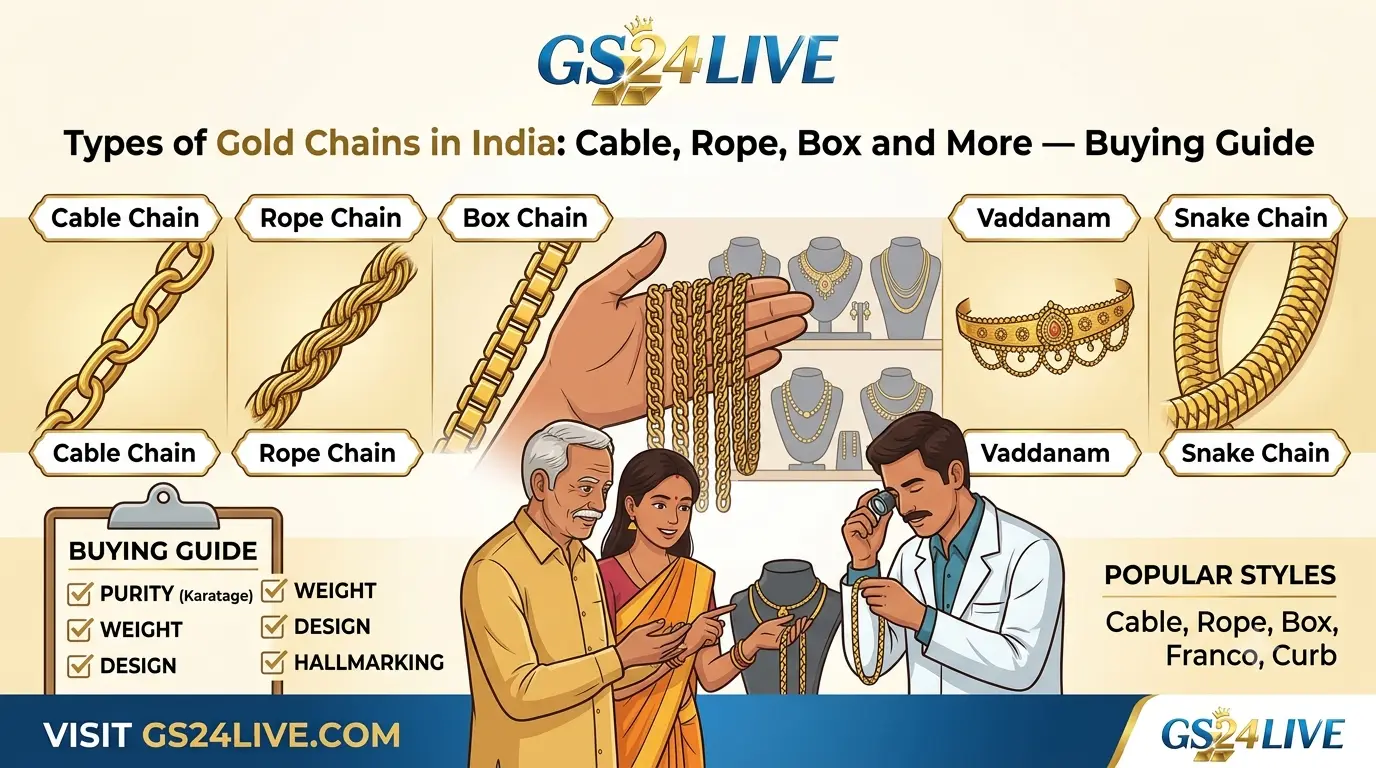
Walk into any Ahmedabad jewellery showroom and the chain counter alone can overwhelm a first-time buyer — dozens of link patterns, some flat, some round, some hollow enough to feel almost weightless in hand. Most buyers default to "whatever looks nice," then discover months later that a thin hollow chain has kinked, flattened, or snapped at the clasp. Understanding the main types of gold chains India jewellers sell — and how construction, not just design, affects durability and resale — saves both money and disappointment.
This guide covers the common chain families, hollow-versus-solid construction, how making charges vary by link complexity, and what buy-back looks like for each type. For karat purity itself, see our 22K vs 24K gold guide, and for how a chain is actually cast and finished, our gold jewellery manufacturing guide covers the workshop process in depth — both are linked once here rather than repeated.
Key Takeaways
- Chain "type" refers to link pattern (cable, rope, box, Figaro, snake); each pattern has different flexibility, strength, and light reflection.
- Hollow chains look bigger for the same gold weight but dent and collapse more easily than solid construction of the same design.
- Simple link patterns like cable and box chains generally carry lower making charges than intricate rope or Figaro designs.
- Daily-wear durability depends as much on link thickness and hollow-vs-solid build as on the pattern name itself.
- Buy-back on chains is usually straightforward melt-based valuation, but broken clasps or heavily kinked links can attract a small deduction.
Cable, Rope, Box, Figaro, and Snake Chains at a Glance
A cable chain is the simplest pattern — uniform oval links connected in a straight line, similar to a bicycle chain in structure. It is the most common everyday design because it is durable, relatively cheap to make, and easy to repair if a single link opens. A rope chain twists multiple small links together to mimic a braided rope's texture, giving strong light reflection and a fuller look, but repair is trickier because a break can unravel the twist pattern locally.
A box chain uses square, boxy links that sit flush against each other, producing a smooth, almost solid-looking surface with good flexibility — popular for both men's and women's daily chains. A Figaro chain alternates one or more small oval links with a longer link, a pattern historically associated with men's jewellery but now common across genders. A snake chain uses tightly interlocking round or square plates that produce a smooth, almost seamless flexible tube — visually striking but prone to kinking if bent sharply against the grain.
| Chain type | Flexibility | Durability for daily wear | Typical use |
|---|---|---|---|
| Cable | High | High — easy to repair | Everyday wear, pendant base |
| Rope | Moderate | Good if solid; twist can loosen if hollow | Statement daily/festive wear |
| Box | Good | High — links resist tangling | Men's and women's daily chains |
| Figaro | Moderate | Good; larger flat links show wear less | Men's chains, bracelets |
| Snake | High along the length | Lower if bent sharply against direction | Fashion-forward daily/evening wear |
Hollow vs Solid Construction: The Question That Matters More Than Pattern
Within any of the patterns above, a chain can be made hollow or solid. A hollow chain uses a thin outer shell of gold with an empty or lightly filled core, letting jewellers offer a visually larger, heavier-looking chain for less actual gold weight and a lower price. A solid chain uses gold throughout the link's cross-section, weighing noticeably more for the same visual thickness and costing proportionally more.
Hollow construction is not automatically "bad" — it suits occasional-wear or fashion pieces well — but it is genuinely more fragile. A hollow link can dent under a fingernail, crush under a bag strap catching it, or collapse permanently if pulled hard, none of which a solid link of the same design would suffer as easily. If you want one chain to survive years of daily wear including gym bags, car seatbelts, and toddlers grabbing at it, solid construction in a simple pattern like cable or box will outlast a hollow rope or snake chain of similar visual size.
| Construction | Gold weight for same visual size | Price impact | Damage risk |
|---|---|---|---|
| Hollow | Lower | Cheaper for the look | Higher — dents, collapses under pressure |
| Solid | Higher | More expensive for the same look | Lower — resists dents and crushing |
How Making Charges Differ by Chain Complexity
Simple, machine-drawn patterns like cable and box chains are generally faster and cheaper to manufacture at scale, which usually means lower making charges per gram compared to intricate rope or handcrafted Figaro variations that require more skilled finishing. Making charges themselves — flat versus per-gram billing, and how much you recover at resale — are explained fully in our gold making charges guide; this article limits itself to noting that chain pattern complexity is one more variable feeding into that same making-charge conversation, not a separate cost category.
Practically, if you are buying primarily for investment-adjacent value rather than design, a simple solid cable or box chain in a common weight gives you the best ratio of gold value to total price paid, since you are paying less for craftsmanship you may not particularly value.
Buy-Back Differences by Chain Construction
At resale, jewellers generally value chains close to melt weight and purity regardless of pattern — a cable chain and a rope chain of identical weight and karat should fetch similar buy-back amounts. The real difference shows up in condition-based deductions: a hollow chain that has visibly collapsed or dented in multiple spots may attract a slightly harsher inspection than a solid chain in similar wear, since assessors sometimes weigh hollow pieces to double-check the metal is intact rather than partially crushed and lighter than it looks.
- Solid chains in simple patterns generally see the cleanest, most predictable buy-back experience.
- Broken clasps are common wear points across all chain types — get clasps checked and re-soldered promptly rather than waiting until resale.
- Keep the original invoice specifying weight and construction; it helps if a buy-back counter questions the chain's actual gold content on a hollow piece. Our sell old gold Ahmedabad guide covers the full resale process and worked buy-back examples in detail.
Ahmedabad Buying Tips: What Local Karigars and Counters Recommend
Ahmedabad jewellers along CG Road and in Manek Chowk's wholesale lanes often stock the same chain families but price hollow versus solid versions quite differently on the tag — always ask specifically whether a chain is hollow or solid before comparing price per gram between two showrooms, since a lighter hollow chain can look like a "better deal" purely because less gold went into it. For men buying a daily-wear chain, box and solid cable patterns are consistently recommended by local karigars over rope or snake designs specifically because they tolerate rough daily handling — motorbike helmets, gym straps, factory floors — better than delicate twisted patterns.
- Ask the counter to weigh the chain in front of you and confirm hollow-vs-solid verbally, not just from a display tag.
- For gifting during wedding season, note that seasonal demand affects chain wait times for custom lengths more than it affects price; our wedding season gold demand guide covers the broader festival calendar if you are timing a larger purchase.
- If buying a chain specifically to later exchange toward a heavier piece, ask about the shop's exchange policy on hollow versus solid pieces upfront, since some shops apply different wastage assumptions to hollow returns.
| Buyer profile | Recommended chain type | Why |
|---|---|---|
| Daily commuter / gym-goer | Solid box or cable | Withstands friction and pressure without denting |
| Occasional festive wear | Hollow rope or snake | Bigger look for lower weight and cost |
| Gifting / pendant base | Solid cable, moderate thickness | Versatile, easy to repair, holds pendants securely |
| Investment-leaning buyer | Solid, simple pattern, standard weight | Lower making charge share of total price |
Risks and Common Mistakes When Buying a Gold Chain
The most frequent mistake is comparing two chains purely on displayed price without confirming both weight and hollow-versus-solid construction — a cheaper-looking hollow chain can actually cost more per gram of real gold than a slightly pricier solid one. A second mistake is choosing a delicate pattern like snake or fine rope for genuinely rough daily use, then being surprised when it kinks or thins at stress points within a year.
A third, quieter risk applies to men's thicker Figaro or box chains bought mainly for status weight — heavier chains concentrate more value in a single wearable item, which raises the stakes if it is lost, snatched, or damaged. Consider whether a slightly lighter chain plus a coin or two in a locker achieves the same total gold holding with lower single-item loss risk.
A Practical Strategy for Choosing Your Next Chain
- Decide the primary use first — daily wear, occasional festive wear, gifting, or pendant support — before browsing patterns.
- For daily wear, default to solid construction in a simple pattern (cable or box) regardless of how impressive a hollow alternative looks on the counter.
- Ask for hollow-vs-solid confirmation and per-gram pricing before comparing two showrooms' displayed totals.
- Match chain thickness to what you will actually wear it with — very fine chains suit pendants; thicker patterns suit standalone wear.
- Get the clasp inspected annually if worn daily; most chain failures start at the clasp, not the links.
- Keep the invoice noting weight and construction type for any future resale or exchange conversation.
Frequently Asked Questions
1. Which type of gold chain is best for daily wear?
Solid cable or box chains are generally the most durable for daily wear because their simple links resist tangling, denting, and crushing better than delicate or hollow patterns.
2. Is a hollow gold chain worth buying?
Yes, for occasional or festive wear where a bigger look at lower cost matters more than daily durability; it is a poor choice for rough daily use.
3. Do rope chains break more easily than cable chains?
A solid rope chain is reasonably durable, but hollow rope chains can loosen or flatten at stress points faster than a simple solid cable chain of similar weight.
4. Does chain pattern affect resale value?
Resale is mainly based on gold weight and purity regardless of pattern; the main difference is condition-based deductions, which are more common on damaged hollow pieces.
5. Are Figaro chains only for men?
Figaro chains are traditionally associated with men's jewellery but are now sold and worn across genders in various thicknesses.
6. How do I know if a chain is hollow or solid before buying?
Ask the jeweller directly and compare weight for the visual size — a genuinely solid chain of a given length and thickness will weigh noticeably more than a hollow one; reputable counters will confirm this without hesitation.
Data Sources and References
- Bureau of Indian Standards (BIS) — hallmarking standards applicable to chain jewellery.
- World Gold Council — jewellery demand and design trend research.
- MCX India — reference gold pricing used for chain valuation.
- Reuters — market reporting on jewellery retail trends.
Conclusion
Choosing between the common types of gold chains India buyers see on any showroom counter comes down to two decisions: which link pattern suits your style and use case, and whether hollow or solid construction fits how hard you will actually wear it. Cable and box patterns in solid construction serve daily wear best; rope, Figaro, and snake designs shine for occasional or statement wear, especially in hollow builds that stretch your budget further for the same visual size.
Confirm weight and construction honestly at the counter, match the pattern to how you will actually use the chain, and keep your invoice for any future resale. That combination matters far more to long-term satisfaction than the pattern name alone.
Disclaimer: This article is for informational and educational purposes only. Precious metal investments and jewellery purchases are subject to market and design-specific risks. Verify weight, purity, and construction at the counter and consult a qualified jeweller before purchasing.
Keywords: types of gold chains India, gold chain designs India, hollow vs solid gold chain, rope chain gold India, box chain gold India, gold chain buying guide, daily wear gold chain India.