
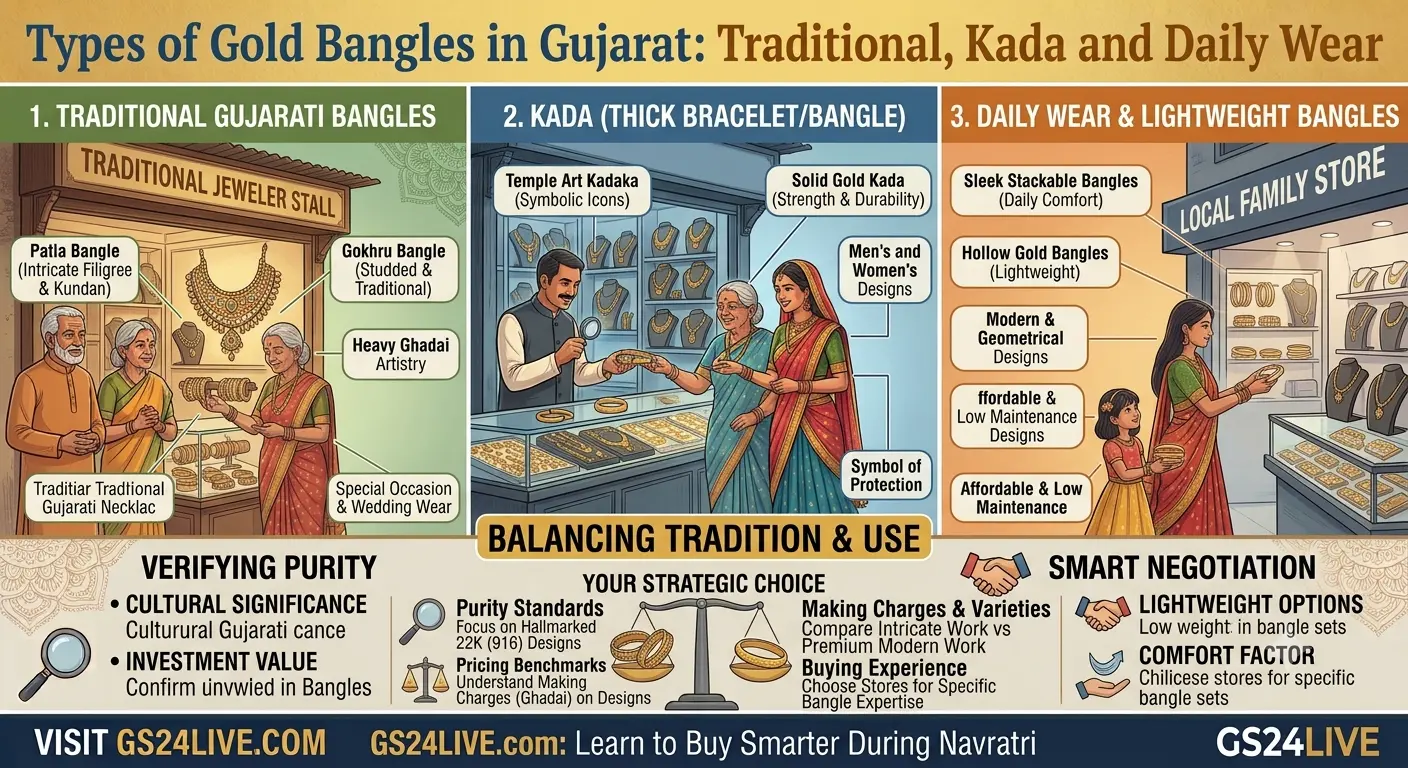
Walk into any Ahmedabad or Rajkot showroom's bangle section and the range on display can be overwhelming — thick ceremonial kada, delicate temple-pattern patla, and slim daily-wear circles all sitting in the same counter. Understanding the types of gold bangles Gujarat buyers typically choose from makes that counter far less confusing, and helps you match the right style to the right occasion and budget. This guide focuses only on bangles — for gold chain constructions like cable, box, or Figaro links, see our dedicated gold chains guide instead. Check GS24LIVE's gold price today page before pricing any bangle purchase.
Key Takeaways
- Gujarat's bangle market broadly splits into ceremonial kada, traditional patla/temple-design pieces, and lightweight daily-wear bangles.
- Kada are typically the heaviest and most symbolic, often gifted at weddings or worn by men and women for ceremonial occasions.
- Hollow-construction bangles cost less per piece for the same visual size but carry lower resale weight and a higher dent risk than solid bangles.
- Daily-wear bangles favour 916 gold for durability, matching the broader Indian preference explained in our 916 gold guide.
- Weight consistency and hallmark checks matter more on hollow bangles than on any other bangle category.
Traditional Gujarati Bangle Styles: Kada, Patla and Temple Design
The kada is Gujarat's most recognisable heavy bangle — a thick, often plain or lightly engraved band worn singly or in pairs, carrying strong ceremonial weight at weddings and important family functions. The patla, a broader flat-band bangle, and temple-design bangles featuring deity motifs in relief work sit alongside kada as classic choices for bridal sets and milestone gifting. These traditional pieces are usually made heavier and in higher purity than daily-wear jewellery, since they are bought as long-term family pieces rather than everyday accessories, and Gujarati families frequently pass them down across generations rather than reselling them. Brides planning a full set alongside these bangles can cross-check our bridal jewellery checklist for the rest of the trousseau.
Daily-Wear vs Occasion Bangles: Matching Style to Purpose
Among the broad types of gold bangles Gujarat showrooms stock, daily-wear pieces are a different design brief entirely — thinner bands, simpler finishing, and lighter weight so they can be worn continuously at work or home without discomfort or excessive wear risk. Occasion bangles, worn a handful of times a year, can afford more intricate stone-setting, enamel work, or engraving since they spend most of their life in a locker rather than on a wrist. Buyers often make the mistake of choosing one heavy, ornate set expecting to wear it daily — a decision that usually ends with the piece staying unused after the first few outings.
| Bangle type | Typical weight range | Best suited for | Price positioning |
|---|---|---|---|
| Kada | 15–40g+ per piece | Weddings, ceremonial gifting | High |
| Patla / temple design | 10–25g per piece | Bridal sets, festive wear | High |
| Plain daily-wear bangle | 4–10g per piece | Everyday use | Moderate |
| Stone-set fashion bangle | 6–15g per piece | Occasional festive/party wear | Moderate to high |
The illustrative purchase mix above reflects how most Gujarati households actually buy — a large share of bangle spending still goes toward the traditional kada and patla categories, even as daily-wear thin bangles grow in popularity among younger buyers.
Hollow vs Solid Bangles: Weight, Comfort and Resale
Hollow bangles are made by shaping thin gold sheet around a light core or leaving the interior empty, which lets a buyer get a visually large, bold-looking bangle for meaningfully less gold weight and cost than an equivalent solid piece. The trade-off is durability — hollow bangles dent more easily under everyday knocks, and any dent or crack usually means a lower buy-back valuation since the jeweller has to account for the actual metal recovered, not the piece's original marked weight. Solid bangles cost more upfront but hold their resale weight cleanly and tolerate rough daily use far better.
| Factor | Hollow bangle | Solid bangle |
|---|---|---|
| Cost for same visual size | Lower | Higher |
| Dent/damage risk | Higher | Lower |
| Resale weight accuracy | Can be reduced by dents | Matches marked weight closely |
| Best suited for | Occasional wear, budget-conscious buyers | Daily wear, long-term keeping |
Buyers planning to keep a bangle for decades, or wear it daily, generally get better long-term value from solid construction despite the higher sticker price — the resale gap between the two can widen further after years of everyday wear.
Rajkot and Ahmedabad Kada Craftsmanship: Regional Differences
Rajkot has long been known within Gujarat for skilled kada and traditional bangle craftsmanship, with local karigars specialising in engraved and textured finishes that carry a distinct regional look compared to the more polished, machine-finished bangles common in Ahmedabad's bigger showrooms. Ahmedabad's CG Road and Manek Chowk counters typically stock a wider mix of styles sourced from multiple manufacturing hubs, giving buyers more choice but less of the single-artisan character Rajkot pieces are known for. Buyers seeking a specific traditional finish sometimes travel or order specifically for Rajkot-style craftsmanship even while living in Ahmedabad.
Risks When Buying Hollow Bangles Without Checking Weight
The most common bangle-buying mistake is assuming a bangle's visual size reflects its gold weight — hollow construction breaks that assumption completely, and two bangles that look identical in size can differ by several grams once weighed. Always ask for the piece to be weighed on a certified scale in front of you, and confirm whether the design includes any wax, lac, or metal filler inside (common in some traditional kada) that adds bulk without adding gold value. Skipping this check is how buyers end up paying gold-rate prices for a partly non-gold interior.
Practical Tips for Choosing and Buying Gold Bangles
- Match purity to purpose: Daily-wear bangles benefit from the durability of 916 gold, the same preference explained in our 916 gold guide, not repeated here.
- Ask for a weighed, itemised invoice: Especially for hollow or filler-based kada designs.
- Check making charges separately: Intricate temple-design and stone-set bangles carry higher labour costs — our making charges guide explains what is reasonable.
- Mind wear-and-tear expectations: Everyday wear does gradually affect finish and shine — our gold weight-loss myths guide covers what is normal wear versus an actual problem.
Frequently Asked Questions
1. What is the difference between a kada and a regular gold bangle?
A kada is a thicker, heavier, usually more ceremonial band, while a regular bangle is typically thinner and made for everyday or lighter occasional wear.
2. Are hollow gold bangles a bad investment?
Not inherently bad, but they carry more resale and durability risk than solid bangles — reasonable for occasional wear, less ideal as a long-term daily-wear investment piece.
3. Which gold purity is best for daily-wear bangles?
916 (22K) gold is the most common choice for daily wear because of its balance of durability and value, as covered in our linked 916 gold guide.
4. Do temple-design bangles cost more than plain bangles?
Yes, generally — the detailed relief work and finishing add meaningful making charges on top of the metal value.
5. How do I check if a bangle has filler material inside?
Ask the jeweller directly and request a weighing in front of you; reputable Ahmedabad and Rajkot showrooms will disclose filler use in traditional kada designs.
6. Is Rajkot a good place to buy traditional gold bangles?
Rajkot is well regarded within Gujarat for kada and traditional bangle craftsmanship specifically, making it a strong choice for buyers wanting that regional artisan style.
Data Sources and References
- BIS — hallmarking standards applicable to bangles and other jewellery.
- World Gold Council — Indian jewellery demand by product category.
- RBI — bullion pricing context for retail jewellery.
Conclusion
Across the types of gold bangles Gujarat showrooms stock, the practical choice comes down to matching kada, patla, temple-design, or daily-wear styles to how often you actually plan to wear the piece, and choosing hollow or solid construction based on whether resale durability matters more than upfront cost. Weigh every piece, check for filler material, and treat regional craftsmanship differences as a genuine reason to shop specifically in Rajkot for traditional designs.
Disclaimer: This article is for informational and educational purposes only. Precious metal investments are subject to market risks. Charts use illustrative data; verify live prices and consult a qualified financial professional before investing.
Keywords: types of gold bangles Gujarat, gold kada Gujarat buying, Gujarati traditional gold bangles, hollow vs solid gold bangle, daily wear gold bangle India, Rajkot gold bangle craftsmanship.