
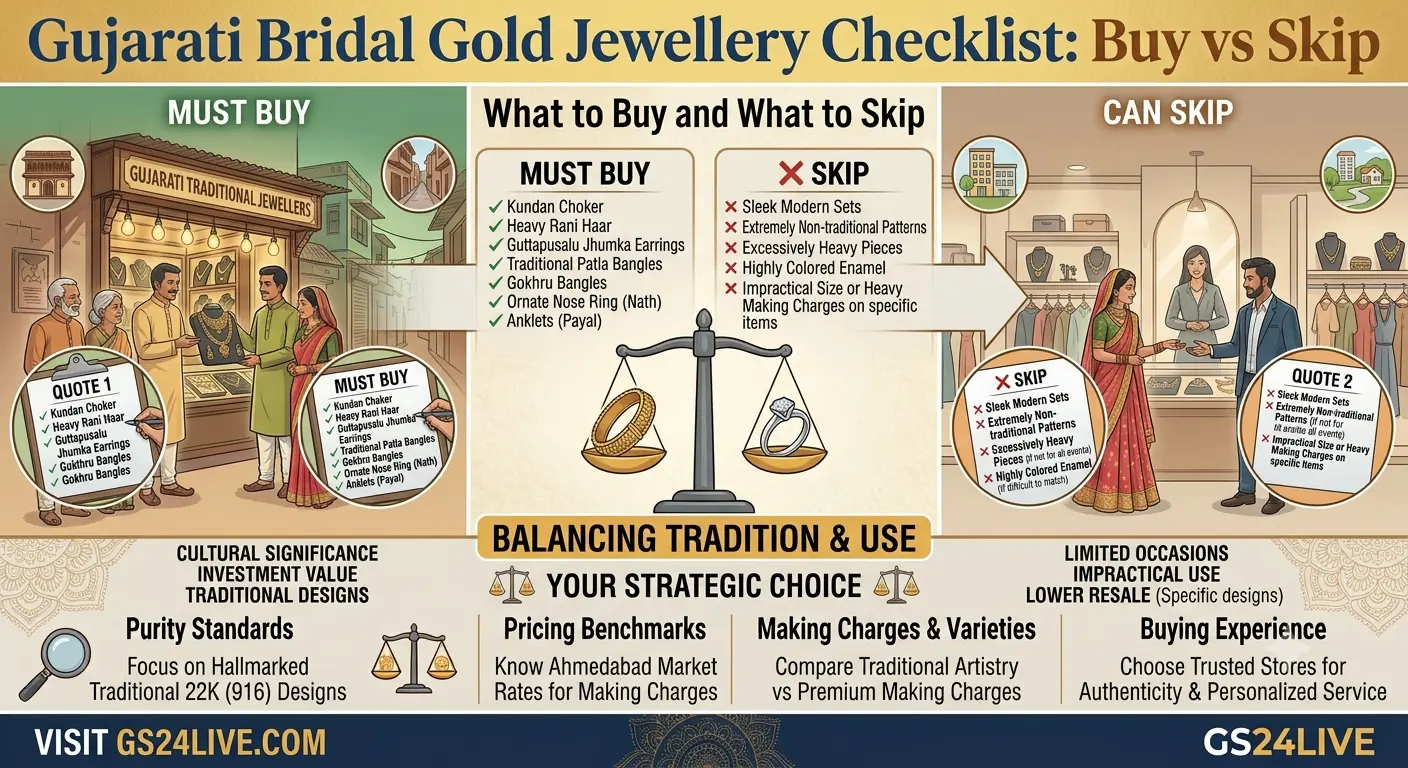
Every Gujarati mother preparing a wedding trousseau eventually faces the same overloaded shopping list — mangalsutra, kandora, bajubandh, nath, hasli, bangles, payal, jhumka, and a full necklace set — and not every item on that list needs to be bought new, in heavy gold, before the wedding date. A clear Gujarati bridal gold jewellery checklist separates what a bride genuinely wears for years from what gets worn once for photos and then sits unused in a locker.
This is a product checklist, not a demand-calendar piece — for when in the year wedding buying peaks and why, see our wedding season gold demand guide in one line only. Check GS24LIVE's live gold price today page before finalising any bridal order.
Key Takeaways
- A practical Gujarati bridal gold jewellery list has a small core of daily-wearable pieces and a larger set of statement pieces worn mainly on the wedding day itself.
- Mangalsutra, a basic chain, and everyday bangles are the pieces most brides continue wearing for years — prioritise budget here first.
- Heavy statement pieces like a full kandora or an elaborate borla are worn briefly and are strong candidates to rent, borrow, or buy lighter than tradition once dictated.
- Splitting the budget across 916 gold for daily pieces and a mix of karats for statement pieces, rather than 916 everywhere, controls both cost and long-term wearability.
- Buying every traditional item at full weight "because it's a wedding" is the single biggest reason families later look to resell pieces they never wear again.
The Core Set Every Gujarati Bride Actually Keeps Wearing
Strip away the ceremonial pieces and a smaller core survives daily wear for years: the mangalsutra, one versatile chain that works with both traditional and western outfits, a pair of everyday earrings, and slim bangles that don't catch on daily tasks. These are the pieces worth prioritising in 916 (22K) for durability, since why 916 dominates Indian wedding buying — workshop preference, resale liquidity, cultural trust — is covered fully in our why 916 gold is popular guide, not repeated here. Chain construction choice for this daily piece — hollow versus solid, clasp strength — is covered in our types of gold chains guide.
Must-Have vs Optional vs Skip-Able: The Full List
| Item | Category | Reasoning |
|---|---|---|
| Mangalsutra | Must-have | Worn daily for years; core cultural piece |
| Basic chain + pendant | Must-have | Versatile with daily and festive outfits |
| Studs or small jhumka | Must-have | Everyday-wearable, moderate weight |
| Slim bangles (2-4) | Must-have | Daily wear, low snag risk |
| Full necklace set | Optional | Occasion-only; consider one versatile set, not multiple |
| Kandora (waist chain) | Optional / rentable | Worn briefly on wedding day; renting is common now |
| Bajubandh (armlet) | Optional / rentable | Ceremonial only; rarely reworn |
| Nath / borla (nose jewellery) | Skip-able heavy version | A lighter design serves photos just as well |
| Hasli (rigid neckpiece) | Skip-able for many budgets | Heavy, occasion-specific; overlaps with necklace set |
| Full payal set in gold | Skip-able | Silver payal is traditional in many Gujarati families anyway |
Typical Weight Ranges By Item (Illustrative Data)
| Item | Typical weight range (illustrative) | Notes |
|---|---|---|
| Mangalsutra | 4-10g | Wide range by design density |
| Basic chain | 8-15g | Depends on construction type |
| Necklace set | 25-60g | Largest single budget item |
| Kandora | 30-80g | Often the heaviest single piece if bought, not rented |
| Bangles (set of 4) | 20-40g | Varies with width and design |
| Earrings | 5-12g | Jhumka styles run heavier than studs |
These ranges are illustrative starting points for budgeting conversations with your jeweller, not fixed prescriptions — actual weight depends entirely on design and family preference.
Ahmedabad Bridal Shopping: Timing Your Order Before the Wedding
Ahmedabad's bridal jewellery shops around CG Road and Manek Chowk see a predictable rush in the final six to eight weeks before wedding season peaks, when custom orders queue up and design choices narrow. A practical local habit: finalise your must-have list and place custom orders at least two months ahead, then shop the optional/rentable pieces closer to the date when showroom stock and rental inventory are both easiest to compare. Ordering your core pieces early also gives more room to negotiate making charges, since shops are less rushed outside the final peak weeks.
Risks of Over-Buying Gold You Will Never Wear Again
- Locked-up capital: heavy ceremonial pieces bought "just in case" sit unused, tying up money that could sit in more liquid gold formats.
- Resale weight loss: buy-back on old, rarely-worn pieces still deducts making charges and wastage, covered fully in our sell old gold guide, not repeated here.
- Design fatigue: heavy traditional sets bought for one ceremony often feel outdated within a few years, unlike simpler daily pieces.
- Storage and insurance burden: more pieces mean more locker space and higher insurance cost for jewellery that is worn once a year at most.
- Colour mismatch over time: yellow-gold heavy sets can feel dated against a bride's evolving preference for white or rose tones, a colour choice explained in our gold colour guide.
Practical Tips For Building Your List
- Start the list with the pieces you expect to wear after the wedding, not just during it, and budget those first.
- Ask your jeweller for rental options on kandora, bajubandh, and heavy hasli pieces before assuming they must be bought outright.
- Keep making charges in mind while ranking items — a heavier piece with high making charges eats more of the total budget than its gold weight alone suggests; full structures are in our making charges guide.
- Choose one versatile necklace set instead of multiple occasion-specific sets, and pair it differently across wedding functions.
- Keep the invoice and hallmark details for every piece from day one — this matters later whether you keep, resize, or eventually resell any item.
Frequently Asked Questions
1. What is the minimum Gujarati bridal gold jewellery a bride actually needs?
A mangalsutra, one versatile chain, basic earrings, and a few slim bangles cover daily wear; everything heavier is occasion-specific and can be scaled to budget.
2. Should I buy or rent a kandora and bajubandh?
Renting is increasingly common for these ceremonial-only pieces, since they are typically worn once and add significant weight-based cost if bought outright.
3. Is 916 gold right for every bridal piece?
916 suits daily-wearable pieces well for durability and resale, but heavier statement pieces are sometimes made in slightly different karats by design — check with your jeweller per piece.
4. How far ahead should I order custom bridal pieces in Ahmedabad?
At least two months before the wedding date, before the final peak-season rush narrows design and timeline options.
5. Can I skip gold payal and use silver instead?
Yes — silver payal is traditional in many Gujarati families already, making it one of the easiest and most culturally accepted items to skip in gold.
6. What happens if I buy too much and want to resell some pieces later?
You can sell through standard buy-back channels, though making charges and wastage reduce the recovered amount — full resale mechanics are covered in our linked sell-old-gold guide.
Data Sources and References
- BIS — hallmarking standards for bridal jewellery purity.
- World Gold Council — India wedding-season demand data.
- Reuters — bullion pricing context for budgeting.
- MCX India — reference pricing behind showroom rates.
Conclusion
A well-planned Gujarati bridal gold jewellery list prioritises the pieces a bride actually keeps wearing — mangalsutra, chain, earrings, bangles — while treating heavy ceremonial-only items as optional, rentable, or scalable to budget rather than mandatory. Ordering core pieces early, tracking weight ranges honestly, and resisting the urge to buy every traditional item at full weight keeps both the wedding budget and the locker manageable for years afterward.
Build the list around what will be worn for years, not just for one wedding day, and the shopping decisions get considerably easier.
Disclaimer: This article is for informational purposes only and is not financial advice. Weight ranges and budget splits are illustrative; verify current rates, designs, and rental options with your jeweller before purchasing.
Keywords: Gujarati bridal gold jewellery, bridal gold checklist India, Gujarati wedding jewellery list, mangalsutra kandora bajubandh, bridal gold budget split, what gold jewellery to buy for wedding.