
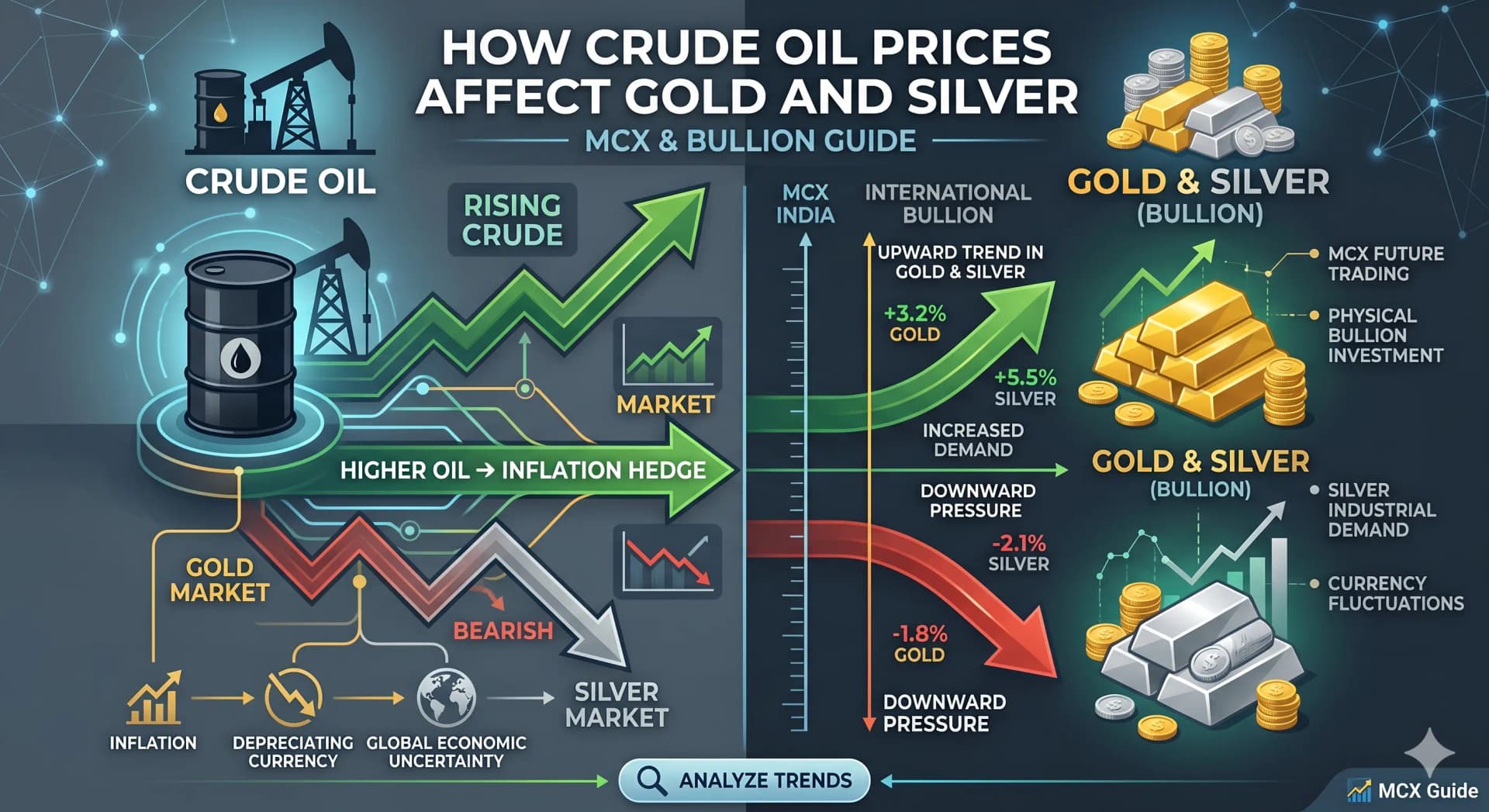
When Brent or WTI crude jumps on the screen, Indian investors often glance next at the live gold price today and silver price today. The link is not magic—it runs through inflation expectations, currency moves, risk sentiment, and sometimes plain fear of supply disruption. Understanding how crude oil prices affect gold and silver helps you read MCX sessions and Ahmedabad counter quotes without treating every oil headline as an automatic buy signal.
Oil is the world's primary energy benchmark. It feeds transport, petrochemicals, and vast supply chains. When oil becomes expensive, costs ripple into goods and services, shaping how central banks set rates and how traders price the US dollar. Precious metals sit in that macro web: gold as a long-running store-of-value story, silver as both a monetary metal and an industrial commodity tied to manufacturing and energy transition supply chains.
This guide explains the gold and crude oil relationship, silver's distinct path, and what Indian participants—from wedding-season buyers to MCX hedgers—should watch. It is educational content, not personalised advice. Confirm live levels on GS24LIVE before acting.
Key Takeaways
- Rising oil often lifts inflation fears, which can support gold—but higher rates or a strong dollar may offset that support short term.
- Silver can react to oil through industrial channels as well as safe-haven flows, producing wider daily swings.
- Indian bullion prices reflect global spot plus rupee movement, duties, and local premia—not oil alone.
- Geopolitical supply shocks can move oil, gold, and silver within the same news cycle for different reasons.
- Disciplined allocation beats chasing vertical moves after a single energy headline.
Why Crude Oil Matters in Global Markets
Crude oil benchmarks set the tone for energy costs worldwide. Producers, refiners, airlines, and governments all respond to price changes. OPEC+ decisions, inventory data, refinery outages, and sanctions headlines can shift curves within hours. For commodity market analysis desks, oil is often the first screen after FX because it influences growth and inflation assumptions across asset classes.
India imports most of its oil requirements, so domestic fuel costs and the trade balance react quickly. That feeds into RBI's policy calculus and rupee sentiment—two variables that convert international gold into rupees at your local jeweller.
Refinery margins, freight rates, and state-level fuel taxes add domestic layers on top of global Brent moves. That is why two cities can feel the same international oil shock differently—and why bullion counters may reprice on rupee news even when dollar gold looks unchanged.
Relationship Between Crude Oil and Gold Prices
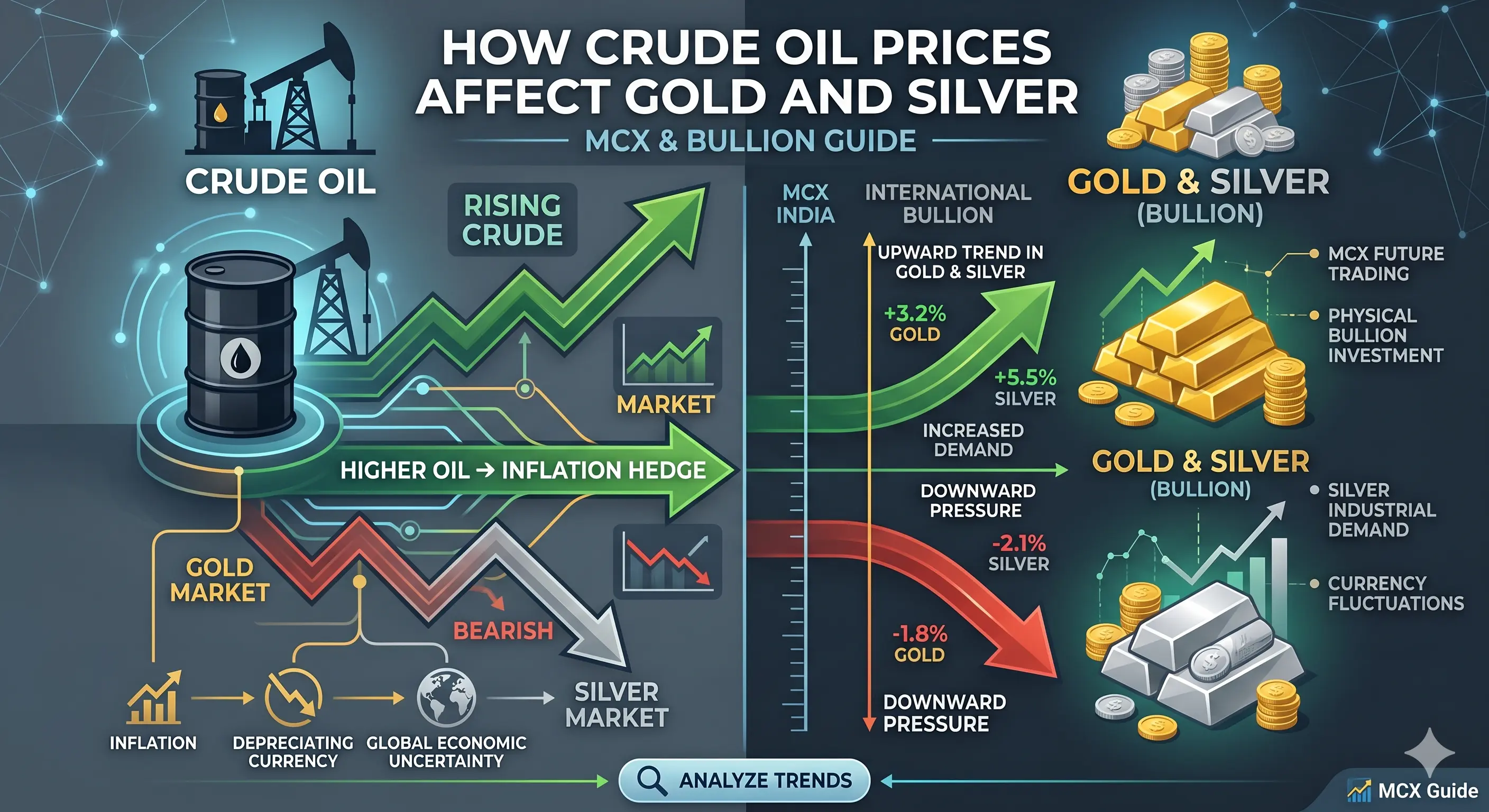
The crude oil impact on gold is usually discussed through inflation and uncertainty channels. Expensive oil can raise headline CPI, leading markets to price slower policy easing or delayed cuts. Gold may benefit if investors worry about purchasing power, yet fall if real yields climb sharply on hawkish repricing.
During supply shocks, gold sometimes gains a geopolitical bid even while oil itself spikes—both reflecting stress, not a simple inverse correlation. Long-term studies show periods of co-movement and periods of divergence; context matters more than a fixed rule.
Beginners should note that ETFs, futures, and physical metal respond to the same macro story with different frictions. An oil headline that moves COMEX overnight may show up in MCX gold analysis at the open with additional rupee adjustment—always check the session you actually trade or buy in.
The bar chart above uses illustrative levels to show how bullion can reprice alongside macro stress. It is not a live oil-gold regression.
| Year | Crude Oil (sample avg) | Gold (₹/10g sample) | Silver (₹/kg sample) |
|---|---|---|---|
| 2019 | ~$64/bbl | ~38,000 | ~44,000 |
| 2020 | ~$42/bbl | ~48,000 | ~50,000 |
| 2022 | ~$99/bbl | ~52,500 | ~61,000 |
| 2024 | ~$82/bbl | ~72,000 | ~92,000 |
| 2026 YTD | Volatile band | ~98,000+ | ~1,08,000+ |
How Oil Prices Impact Silver Markets
Oil prices and silver market dynamics intersect through industry. Silver is used in electronics, solar, and chemical processes where energy costs matter for margins. A sustained oil rise can squeeze manufacturers, yet if the same rise signals inflation or weak growth, silver can whipsaw between industrial softness and monetary demand.
Traders on MCX silver often see wider percentage ranges than gold on oil-heavy days because speculative depth differs and industrial narratives toggle quickly.
Mining and recycling supply rarely change overnight because of oil, but processing and freight costs can influence timing of deliveries into Asian hubs. Those frictions occasionally widen local premia even when dollar spot looks stable—another channel beyond the simple “oil up, gold up” story.
Inflation and Energy Price Connection
Energy is a major CPI component or input. When crude rallies, transport and input costs climb, pushing inflation expectations. Central banks may warn about second-round effects. For inflation and gold prices, the market debate is whether policy will stay restrictive long enough to cap bullion despite sticky prices. For a deeper look at this channel, see our guide on how global inflation impacts gold and silver.
Core inflation measures help separate persistent trends from volatile energy swings. Bullion investors who only watch headline oil moves can miss offsetting moves in services or wages.
Inventory releases from major consumer countries and weekly US petroleum status reports can whipsaw oil without changing the month-end bullion thesis. Treat high-frequency energy data as volatility fuel, not always as a structural pivot for gold allocation.
US Dollar, Oil, and Precious Metals Relationship
Oil is priced in US dollars globally. A stronger dollar can make crude cheaper for non-US buyers while tightening financial conditions. Gold, also dollar-denominated internationally, can face cross-currents: inflation support versus dollar headwinds. Silver follows similar FX translation into rupees for Indian holders.
Watch DXY, USD/INR, and Brent together rather than any single print.
When the dollar strengthens because markets expect higher US rates after an oil-led inflation scare, gold can struggle in dollar terms while still rising in rupees if the INR weakens enough. That split explains many confusing days for Indian readers who only follow one quote.
Geopolitical Tensions and Commodity Markets
Conflicts near major shipping lanes or producing regions can spike oil on supply fear. The same headlines can lift gold as a safe haven. Silver may join rallies or lag depending on whether traders emphasise risk-off flows or industrial slowdown fears. Crude oil and bullion market headlines often cluster on the same day but fade on different timelines.
MCX Gold and Silver Analysis
MCX gold analysis during oil volatility usually starts with overnight COMEX and FX, then local open interest. Jewellers may adjust hedge ratios; funds may trade mean-reversion or momentum. Contract expiries and margin changes add technical noise unrelated to oil fundamentals.
Silver contracts can gap more on energy news if global industrial metals are also moving. Check exchange circulars for lot sizes and price bands.
Spread traders sometimes watch the gold–silver ratio alongside Brent, but ratio trades add complexity. For most retail readers, understanding direction and volatility on each metal separately is enough before layering cross-commodity strategies. Our guide to the top factors affecting gold prices daily covers the other drivers that move bullion beyond oil.
Gold vs Silver During Oil Price Surges
Oil shocks rarely hit both metals equally. If you are deciding which to hold through an energy-driven cycle, our gold vs silver investment comparison weighs returns, volatility, and storage in detail.
| Feature | Gold | Silver |
|---|---|---|
| Typical oil-shock behaviour | Safe-haven bid common | Higher beta, industrial cross-currents |
| Indian retail use | Dominant in weddings | Gifts, coins, selective investment |
| MCX liquidity | Very deep | Deep, sharper spikes |
Historical Examples of Oil Price Shocks
| Episode | Oil move (general) | Bullion context |
|---|---|---|
| 1973 oil embargo | Sharp rise | Gold rallied over subsequent years amid macro stress |
| 2008 financial crisis | Collapse then stimulus | Initial liquidity crunch, then policy support for assets |
| 2022 Russia-Ukraine energy shock | Spike in Brent | Gold volatile; silver swung on growth fears and inflation |
| Metric (sample oil-volatile week) | MCX gold | MCX silver |
|---|---|---|
| Intraday range | Moderate | Often wider |
| Gap risk on headlines | Present | Frequently larger |
| Hedging activity | Jewellery-led steady | Industrial + speculative mix |
Best Investment Strategies During Commodity Volatility
Predefine allocation to bullion as part of a broader plan. Use systematic purchases rather than one-off reactions to Brent spikes. If you hedge business exposure on MCX, separate that from long-term family gold holdings mentally and operationally.
Keep emergency rupee liquidity so you are not forced to sell bullion into a temporary dip caused by a crowded oil trade unwinding.
Document why you own bullion—hedge, diversification, or consumption—and match product choice to that goal. Sovereign bonds and ETFs behave differently from physical metal during stress weeks when logistics and spreads matter. Oil volatility is a test of process more than of prediction skill.
Oil–Bullion Outlook for 2026
Analysts monitoring 2026 expect energy markets to stay sensitive to geopolitics, OPEC discipline, and global growth data. Gold may continue drawing diversification flows when fiscal and geopolitical risks linger. Silver will likely remain the higher-beta expression when industrial cycles and oil move together.
Indian investors should pair international oil charts with domestic fuel policy and rupee trends—especially ahead of budget or election cycles when energy politics intensifies.
Silver market trends in energy-intensive years often reflect solar and electronics order books as much as CPI. If oil falls because global growth slows, silver can weaken even when gold holds up on central-bank buying—another reason to treat the metals as related but not identical.
Frequently Asked Questions
1. Does a rise in crude oil always increase gold prices?
No. Gold can fall on the same day oil rises if the dollar and real yields strengthen sharply.
2. Why does silver sometimes fall when oil spikes?
Markets may price slower industrial growth, outweighing short-term safe-haven interest in silver.
3. How fast does MCX react to overnight oil moves?
Often at the open, sometimes with gaps if global metals and FX moved while India was closed.
4. Should Ahmedabad buyers time purchases to oil news?
Timing is uncertain; focus on total rupee price, purity, and documented buy-back terms.
5. How does an OPEC production cut reach your Ahmedabad gold quote?
Oil moves inflation expectations, which shift dollar and bond yields, which move spot gold, which converts through USD-INR into landed rupee cost. Each link can delay or reverse the move.
Data Sources and References
Source notes for this crude oil impact on guide come from exchange, central-bank, and industry publications that Indian readers can verify independently.
- Multi Commodity Exchange of India (MCX) – the exchange reference behind the crude oil impact on timing and board-gap examples in this guide.
- Reserve Bank of India (RBI) – Indian macro reference for the crude oil impact on interest-rate and currency angles in this article.
- World Gold Council – industry demand statistics used to support the crude oil impact on jewellery vs investment framing.
- London Bullion Market Association (LBMA) – London benchmark context behind the crude oil impact on global spot discussion.
- Reuters – international news service covering energy, commodities, and macroeconomic developments.
- International Monetary Fund (IMF) – international macro research cited where crude oil impact on depends on growth and risk appetite.
- OPEC – publishes oil market reports and production guidance relevant to energy price trends.
- US Federal Reserve – publishes policy statements and economic data shaping rate and dollar expectations.
These sources help provide reliable insights into global bullion markets, energy trends, and price movements affecting gold and silver trading in India.
Conclusion
Crude oil shapes the macro weather in which gold and silver trade, but it is not the only forecast. Inflation, rates, the dollar, geopolitics, and local rupee dynamics all filter oil shocks before they reach MCX and Ahmedabad counters. Use energy news for context, keep bullion within a diversified plan, and verify prices live before you commit capital.
Building a simple watchlist—Brent, USD/INR, MCX gold, MCX silver, and the next domestic CPI date—takes minutes and saves hours of guesswork when headlines stack up on the same morning.
Disclaimer: Explains energy–bullion transmission for education — not a signal to buy oil or metals after every inventory print. Verify live prices independently.